Show summary Hide summary
A reanalysis of seismic data from NASA’s InSight lander shows a strong 2021 marsquake originated from a fault buried beneath Valles Marineris, the vast canyon system on Mars. The finding indicates that fault lines under the canyon can still move, challenging the idea that Mars is entirely geologically dead.
A rare, deep marsquake
On Aug. 25, 2021, InSight recorded a powerful tremor labeled S0976a. At magnitude 4.2, it was the largest event logged by InSight at the time and remains one of the biggest marsquakes recorded, since surpassed by a 4.7-magnitude event in May 2022.
Reddit rolls out For You feed to deliver personalized recommendations
After Fernando Mendoza’s debut, doubts emerge over the Raiders’ plan
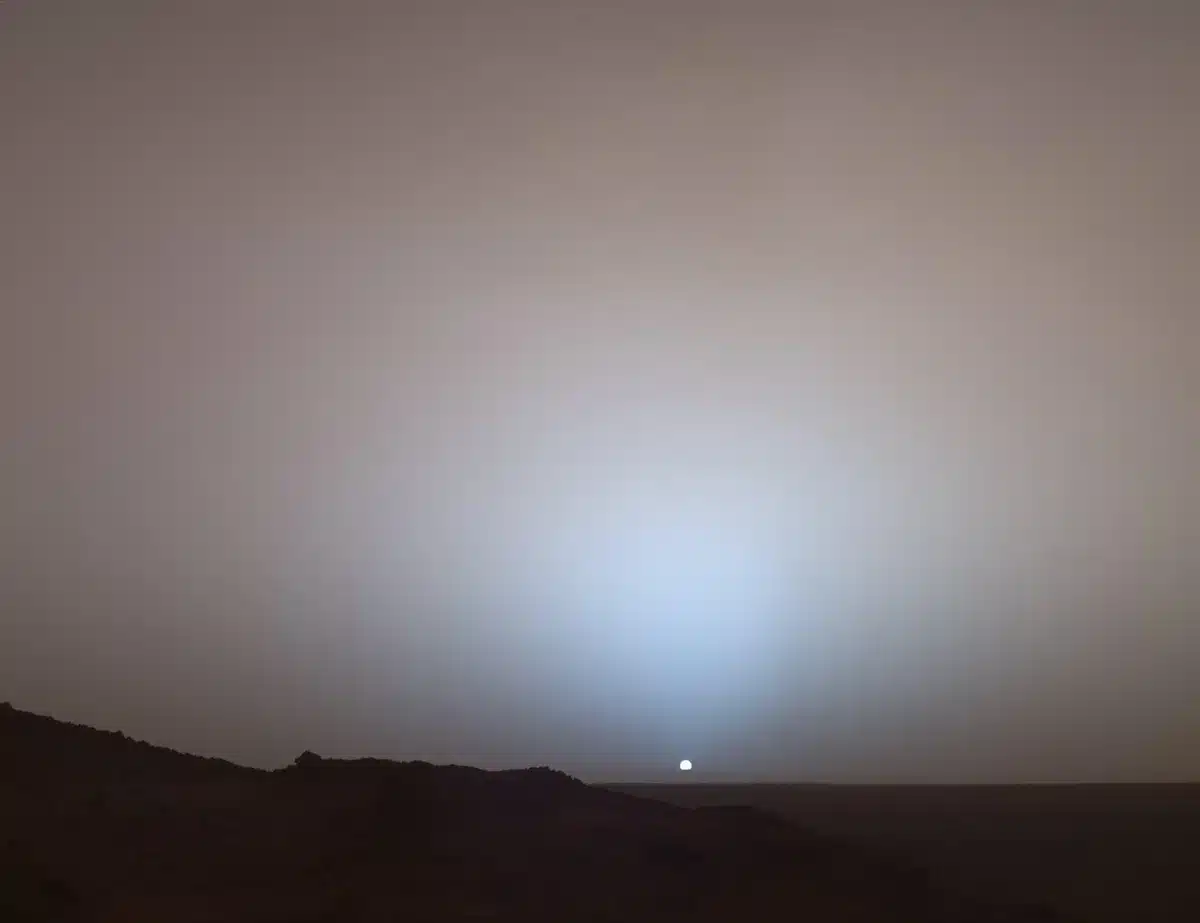
Unlike many smaller quakes tied to surface impacts near the lander, S0976a traced back to the planet’s opposite hemisphere — the western reaches of Valles Marineris — and produced seismic waves consistent with a deep source rather than a shallow surface disturbance.
Evidence for a reactivated fault
The new study, published Oct. 15 in Nature Communications, reexamined the quake’s seismic signatures and used modeling to test possible causes. The authors conclude the best match is a slip‑strike event: horizontal motion along a steep, deep-seated fault beneath the canyon.
Researchers estimated the rupture occurred roughly 20 to 40 kilometers (12 to 25 miles) below the surface. They ran alternative scenarios — including a major asteroid impact or a landslide inside the canyon — and found those could not reproduce the observed wave patterns.
Why this matters
The result shows that large faults on Mars can still produce seismic activity long after the planet’s main mountain- and canyon-building eras ended. Jung‑Hun Song, lead author and an Earth science researcher at Imperial College London, said the work demonstrates that Valles Marineris is not merely a fossil feature but contains faults that can slip and generate quakes.
Co-author Doyeon Kim added that the same seismic event helped probe Mars’ deep interior while also revealing what happened at the source — a reminder that single quakes can yield multiple scientific returns.
Valles Marineris and Mars’ tectonic context
Valles Marineris stretches as much as about 2,500 miles (4,000 kilometers) across the red planet — roughly ten times the length of the Grand Canyon — and dwarfs terrestrial canyons in width and depth. The system lies near the Tharsis volcanic region, home to enormous volcanoes including Olympus Mons.

Planetary scientists consider Mars largely inactive because its smaller size led to faster cooling of the interior and because it lacks the plate tectonics seen on Earth. Still, the planet hosts major crustal fractures that act like giant cracks rather than the plate boundaries familiar on our world. This study shows such fractures can remain mechanically important.
Probing Mars with seismic data
Marsquakes were first confirmed by InSight beginning in 2019; follow-up analyses have even identified older events in data from the Viking missions. InSight, which landed in 2018, provided a unique seismometer on the Martian surface until late 2022, when dust covering its solar panels ended the mission’s ability to transmit data.
Although the lander is no longer active, its archived recordings continue to deliver new discoveries. The current paper demonstrates how reanalysis of existing seismic datasets can reveal previously hidden activity and inform searches for ongoing tectonism on other planetary bodies.