Show summary Hide summary
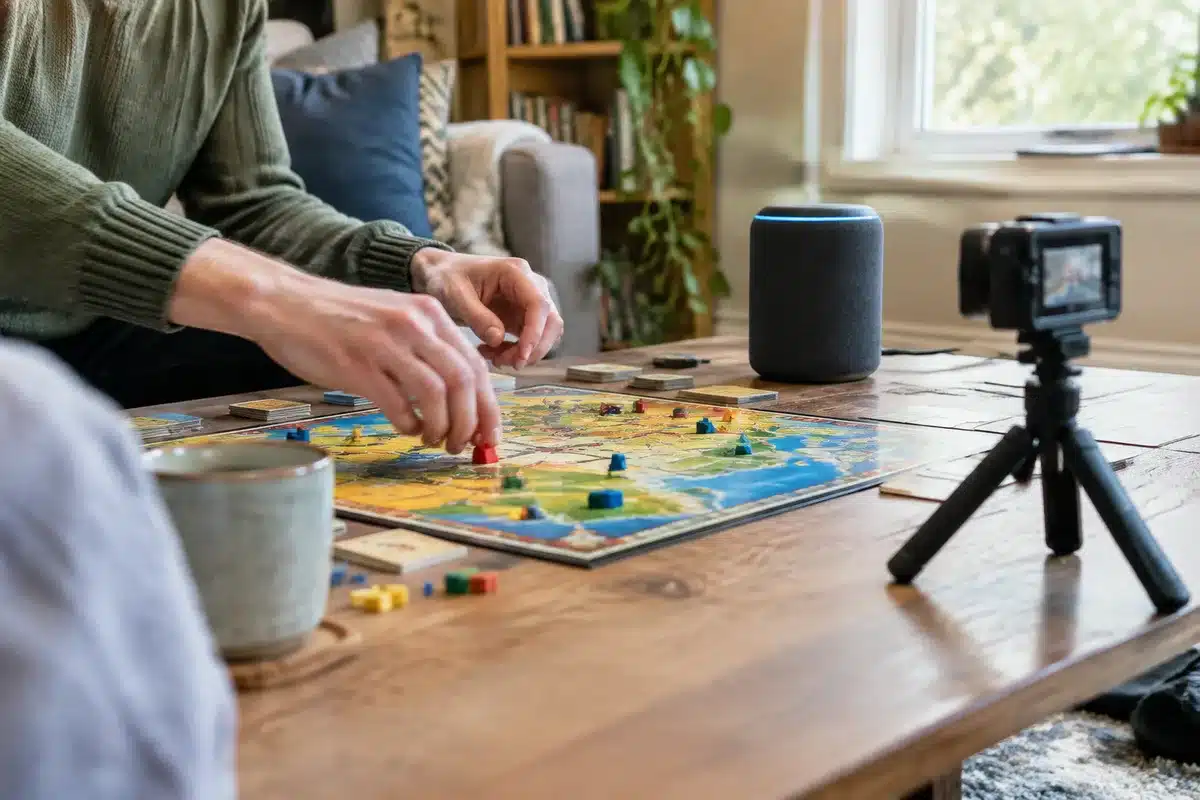
Amazon has been showing off a new way for its smart-home tech to join in on family game night: a camera accessory that can recognize board games and guide players through rules and moves, paired with the company’s high-fidelity Echo Studio speaker. The combination aims to blend visual recognition and spoken guidance, making it easier for people to learn games like Monopoly without paging through a manual.
What the system does
The camera is designed to identify game boards and components, then provide step‑by‑step assistance through Alexa. In demonstrations, the setup reportedly recognized board layouts, tracked pieces, and explained rules on request. Voice instructions routed through the Echo Studio give the audio a fuller, room‑filling quality that Amazon positions as helpful for groups.
Amazon’s Echo Studio adds camera that can monitor pets and explain Monopoly rules
Week 11 college football takeaways: winners, losers and Lane Kiffin’s year ends quietly

Rather than replacing traditional rulebooks, the feature is pitched as a practical aid: quick rule lookups, clarifications on complex turns, and on‑the‑spot answers to questions about scoring or movement. For casual players who dislike reading long instructions, that hands‑free guidance could speed up play and reduce friction.
How it fits with Amazon’s device lineup
Echo Studio sits at the top of Amazon’s speaker range, known for stronger bass and support for spatial audio. Adding a camera that can “read” tabletop games extends the product from audio playback into interactive, visual assistance. Amazon’s broader strategy has often linked its speakers, displays, and cameras to create more capable, multi‑modal home assistants.
Voice‑first interactions remain central: users can ask Alexa to explain a rule or to confirm whether a move is legal. The studio speaker’s sound clarity may make those exchanges more natural in noisy living rooms or at crowded kitchen tables.
Privacy and technical questions
Introducing a camera into intimate spaces inevitably raises privacy considerations. Amazon has previously offered features such as physical camera shutters and local processing modes on some devices, but the specifics for this game‑assist camera have not been detailed publicly. Consumers will likely want clear information about what imagery is stored, whether processing happens on the device or in the cloud, and how long any data is retained.

From a technical standpoint, reliable game recognition requires robust computer vision and context awareness. Lighting, camera angle, and the variety of board designs can affect performance. The feature’s usefulness will depend on how well it handles different game editions, pieces that are similar in color or size, and dynamic play situations.
Potential benefits and limitations
There are several clear upsides. New players could learn faster, rule disputes might be resolved without argument, and families or groups that include people with limited mobility or vision could benefit from spoken guidance.
- Accessibility: Voice instructions can make games more accessible for those with reading difficulties.
- Convenience: Quick rule lookups remove the need to hunt for physical manuals.
- Social use: The system is geared toward group play, leveraging a single central speaker and camera.
Limits are equally important to note. Not every game will be supported initially, and some players may prefer the tactile and social elements of handling rules and pieces themselves. Accuracy in real‑world settings will determine whether the feature is seen as a novelty or a practical tool.
Broader market context
Smart devices that mix audio, voice assistants, and cameras are already common in many homes. The new camera concept continues a trend toward devices that try to interpret physical environments and offer contextual help. For Amazon, integrating such features into its Echo ecosystem is a natural extension of its strategy to embed Alexa into everyday routines.
How consumers react will depend on demonstrated reliability, straightforward privacy controls, and the range of supported games. If those elements align, game‑assist cameras could become a niche but useful addition to the smart‑home toolkit.
What’s next
Amazon has not published a detailed rollout plan or pricing for the camera accessory and its game‑assist features. Observers will be watching for hands‑on reviews and clearer privacy disclosures once the product reaches a wider audience. Until then, the concept offers a glimpse at how computer vision and voice interfaces might change simple shared activities like board games.