
Show summary Hide summary
NASA’s long-serving Swift space telescope burned up after returning to Earth’s atmosphere, marking the close of a mission that transformed rapid-response astronomy. The spacecraft reentered over northern Sumatra, and officials say most of it likely disintegrated on descent with no reported injuries or damage.
Reentry over Sumatra
NASA reported the observatory entered the atmosphere at 7:39 a.m. EST on Wednesday above the North Sumatra region of Indonesia. The agency gave the approximate location as 3.4 degrees north latitude and 98.6 degrees east longitude.
Swift, NASA’s 22-year-old space observatory, burns up above Sumatra
Alexa Home Map provides a visual dashboard to manage smart home devices

Engineers expected the bulk of the telescope to burn up during reentry. NASA estimated a roughly 1-in-2,100 chance that any surviving fragments would strike a populated area. Authorities have not reported any damage or injuries.
A mission that exceeded its design
The craft, officially named the Neil Gehrels Swift Observatory, weighed about 3,200 pounds (1,450 kilograms) at launch. It lifted off in November 2004 and was originally built for a two-year campaign.
Instead of retiring after a brief run, Swift operated for nearly 22 years. Its suite of three instruments—covering ultraviolet, optical and X-ray wavelengths—could pivot quickly to observe fleeting events. That agility made it a key tool for following sudden cosmic outbursts within minutes.
According to NASA, Swift’s observations underpin roughly 7,000 research papers. The telescope played an outsized role in studies of gamma-ray bursts, supernovas, black holes and other transient phenomena, leaving a large archive scientists will mine for years.
How the mission came to an end
Swift’s orbit gradually degraded because of atmospheric drag. Periods of increased solar activity expanded Earth’s upper atmosphere, which in turn raised drag on low-orbiting satellites and hastened their descent.
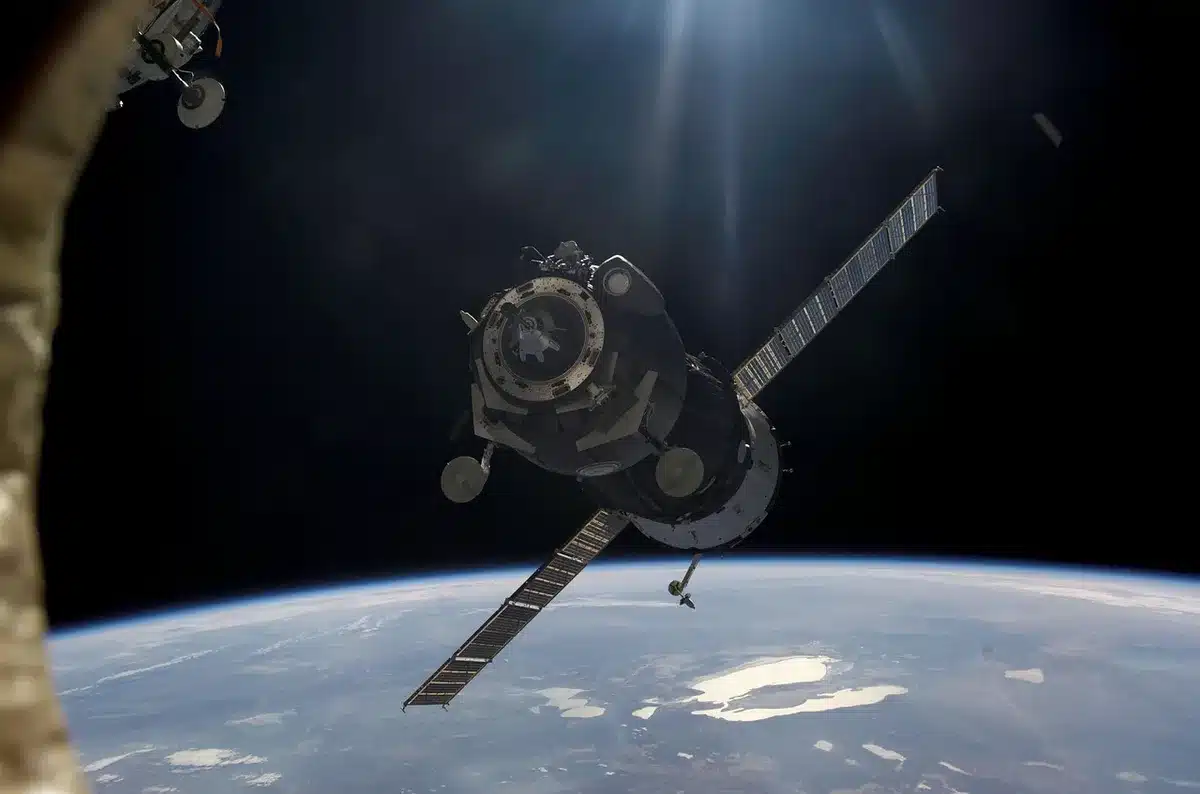
Earlier this year, NASA evaluated a private attempt to extend Swift’s life. In August 2026, a robotic spacecraft developed by Katalyst Space Technologies was meant to rendezvous with Swift and transfer enough momentum to raise its orbit. The boost attempt failed after launch, and Swift remained on a decaying trajectory.
With altitude dropping and observations becoming impractical, NASA formally ended Swift’s science operations on Oct. 20. The agency called the retirement a planned, if unfortunate, turning point after two decades of service.
Legacy for rapid-response astronomy
Swift leaves behind capabilities and data that helped define modern transient astronomy. Its rapid-slewing design set a standard for how observatories respond to sudden events, from brief gamma-ray flashes to exploding stars.
Even though the spacecraft is gone, the scientific record remains. The mission’s extensive data trove and the thousands of resulting papers will continue to inform studies of energetic cosmic phenomena and guide the design of future rapid-response instruments.