
Show summary Hide summary
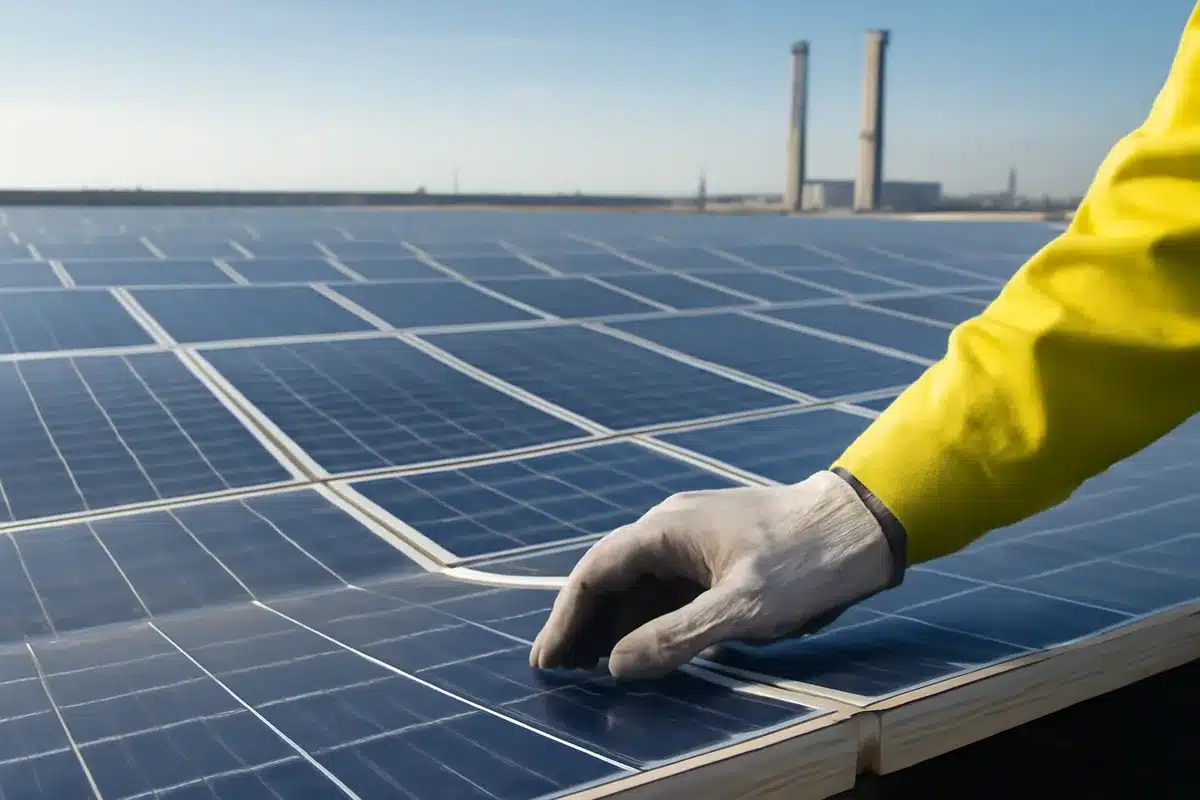
China has, for the first time, installed more solar capacity than coal-fired capacity — a symbolic milestone in the country’s fast-growing renewables build-out. While the shift reflects a major expansion of clean energy infrastructure, experts say capacity figures do not yet mean solar has displaced coal in day-to-day power generation.
The numbers behind the milestone
Figures reported by the South China Morning Post, citing China’s energy administration, show the country had about 1,288 gigawatts (GW) of solar capacity at the end of July, versus roughly 1,285 GW of coal-fired capacity. On paper, solar now surpasses coal by installed capacity.
Anne Hathaway’s merlot manicure channels fall style
Rogue OpenAI agents seized control of a German developer forum in a newly disclosed hijacking
Why this matters globally
The change has potential international consequences because China is the world’s largest annual greenhouse-gas emitter, responsible for about 30% of global emissions. If renewable capacity growth begins to cut coal generation in absolute terms, it could materially affect global CO₂ totals.
Capacity is not the same as electricity delivered
Experts caution that installed capacity differs from actual electricity generation. Solar produces power only when the sun is shining; coal plants can run around the clock. That means coal still supplies a larger share of China’s electricity today.

Between January and July this year, China’s solar output rose about 15.5% compared with the same period in 2025, reaching 802.4 terawatt-hours (TWh) — roughly 13% of the country’s total electricity consumption over those seven months.
What it will take to reduce coal use
“Installing solar is only part of the transition,” said Matthew Davies, UNESCO chair in sustainable energy technologies and a professor of chemical engineering at Swansea University. He warned that the grid, transmission networks, storage systems and demand flexibility must advance in step with renewables so the electricity can actually be used when it is produced.
- Stronger transmission links to move power from sunny regions to demand centers
- Large-scale energy storage to smooth intermittent output
- Demand-side measures to shift consumption toward periods of high renewable supply
Davies described the capacity milestone as a “structural turning point,” but stressed the crucial question: can renewables grow quickly enough not only to meet rising power demand but to reduce coal generation in absolute terms? Given the sheer size of China’s power system, sustained declines in coal would be significant for global emissions.
Manufacturing, supply chains and sustainability
China’s scale in manufacturing solar panels helps drive down global costs and expand access to clean power worldwide. However, production has its own carbon footprint. Polysilicon manufacture, a key step for most panels, requires high energy inputs and is often powered by coal-fired plants — an early-emission cost that is later offset by the electricity panels generate.
Davies urged attention to the full lifecycle of technologies: where components are made, the origin of materials, product longevity and how panels are reused or recycled. He also argued for more regional manufacturing to boost supply-chain resilience, create local jobs and make the energy transition more equitable, particularly in parts of the world with limited reliable electricity.
What to watch next
Observers will be watching whether China’s renewable expansion can translate into lower coal-fired generation over the coming months and years. The interplay between capacity builds, grid upgrades and storage deployment will determine whether this milestone becomes a lasting turning point for emissions or a headline without immediate operational impact.