Show summary Hide summary
Archaeologists working at a Roman site in Bulgaria have uncovered a human skeleton inside a giant ceramic storage jar, a finding that suggests the person hid in the vessel during an attack more than 1,600 years ago and died when fire swept through the area.
Uncovering a body inside a dolium
The remains were found on Aug. 10 within a Late Roman turret at the colony of Deultum, in the northern tower of the western gate, the excavation team reported. Lead excavator Lyudmil Vagalinski of the Bulgarian Academy of Sciences said the discovery was unexpected.
Anne Hathaway’s merlot manicure channels fall style
Rogue OpenAI agents seized control of a German developer forum in a newly disclosed hijacking

“We were surprised,” Vagalinski told Live Science in an email, noting that finding human remains inside urban sites from antiquity is uncommon except after catastrophic events such as enemy attacks or natural disasters.
Items found with the skeleton
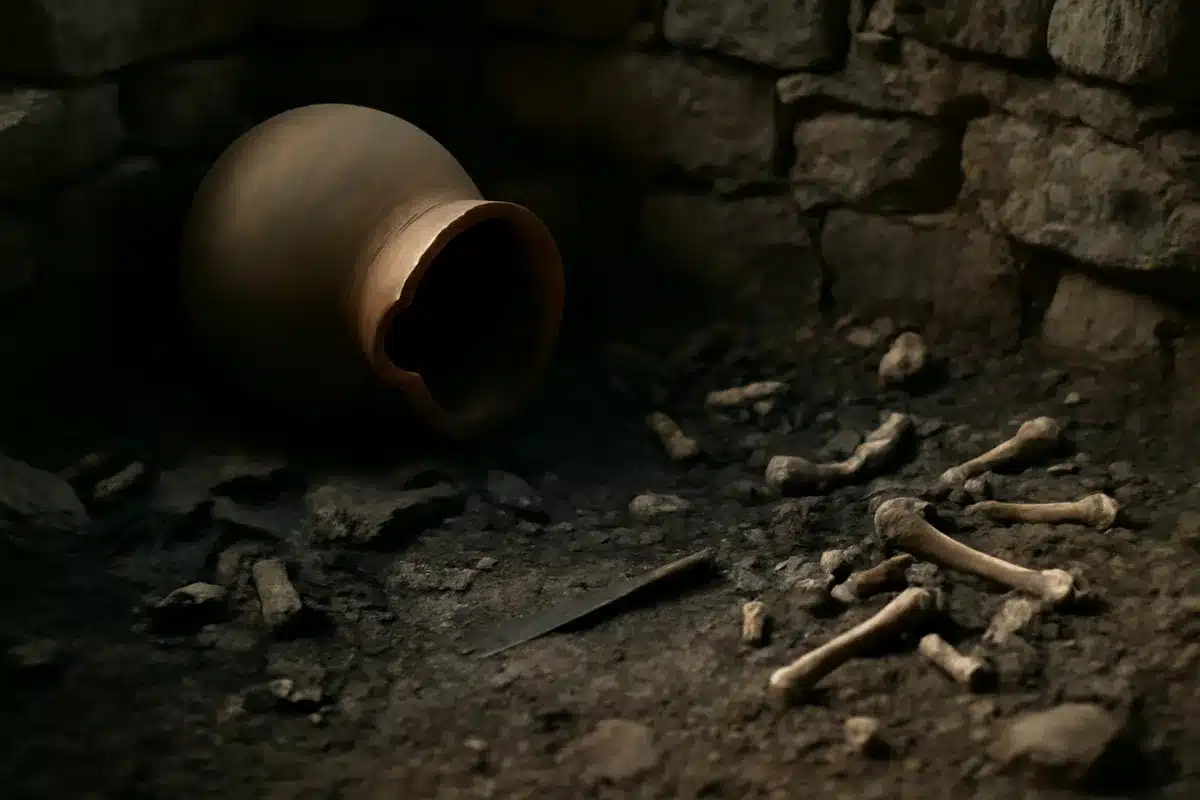
The body lay inside a large vessel known as a dolium, accompanied by two iron knives and a belt. Archaeologists also documented extensive signs of burning around the jar: ashes, coals, blackened walls, melted glass, broken bricks and tiles, and the bones of domestic animals. Several bronze coins were recovered nearby, likely lost during the chaos.

Dolia were the largest pottery containers used in the ancient world for storing commodities such as olive oil and wine. While the biggest examples could hold more than 260 gallons (about 1,000 liters), the preserved lower portion of this jar measured roughly 3 feet (1 meter) across, Vagalinski said.
What the evidence suggests
Vagalinski and his team interpret the scene as the result of an attack on Deultum in the Late Roman period. The presence of animal bones and domestic items suggests people may have driven livestock inside the fortification when danger approached.
The position of the skeleton, described as similar to that of a sleeping person, and the discovery of ashes beneath the body led researchers to conclude the individual entered the jar after the fire had already begun. Vagalinski said the young person — probably a man — held one iron knife between his legs and had a second blade fastened to his belt, apparently prepared to defend himself if discovered.
“In any case, he made no attempt to get out of the ceramic vessel,” he added.
Dating and wider context
Preliminary analysis places the event at about A.D. 400, though the team expects to refine that date as more field data are processed. Deultum was attacked repeatedly in the fourth and fifth centuries by East Germanic groups and the Huns, and the find fits the pattern of violence recorded for the region during that era.
Next steps for the investigation
The skeletal remains have been transferred to Sofia, where a physical anthropologist will carry out a detailed study. The excavation team plans to return next summer to extend their work across the entire western Late Roman gate, which dates to roughly A.D. 300, and to complete the investigation of the northern turret where the dolium was unearthed.
Earlier in the season, the project also revealed an older latrina — a Roman toilet — dated to between the second and third centuries near the gate, evidence of the site’s long and layered occupation. Bulgarian outlet Standart News first reported the dolium discovery.