
Show summary Hide summary
Engineers have converted a 19th-century acoustic trick into a way to move tiny machines without any onboard motors. By shrinking resonant cavities so they respond to focused high-frequency sound, researchers created small devices that can steer, lift or spin using only sound waves.
A classic physics effect made microscopic
The mechanism traces back to experiments by the German physicist Hermann von Helmholtz in the 1850s. Helmholtz observed that air trapped in a cavity can resonate and emit a faint jet of air — the same principle behind the tone produced when you blow across the neck of a bottle.
Ultra-thin women smoking cigarettes are making a comeback as a fashion trend
Windows Memory Diagnostic explained: what the test does and how to read results

Researchers adapted that principle by dramatically reducing the size of the cavities. Shrinking the resonators pushes their natural frequencies into the ultrasonic range, which is inaudible to people and can be aimed precisely with modern transducers.
Turning sound into thrust
The team, including engineers at the Swiss Federal Institute of Technology in Lausanne (EPFL), designed hollow structures that amplify acoustic pressure and expel a small jet of air when driven at the right frequency. Rather than relying on magnets, coils or gears, motion comes from the patterned cavities themselves.
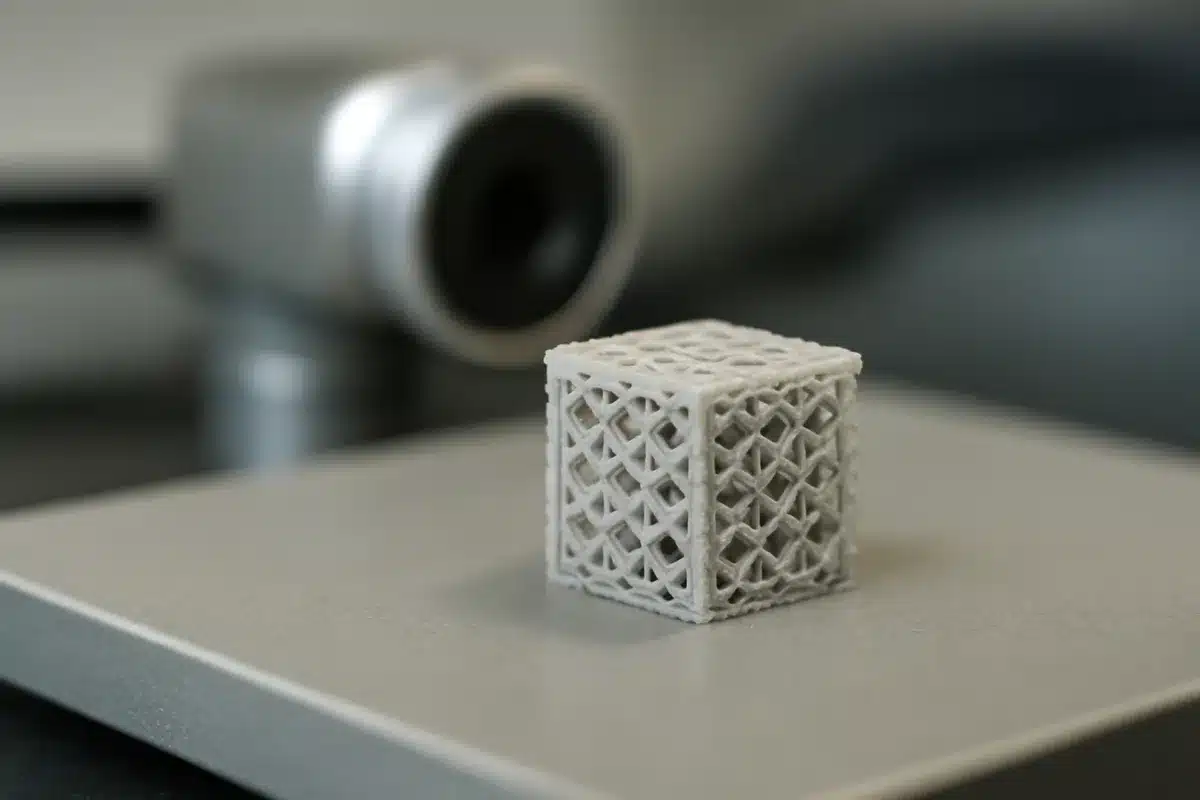
To fabricate those tiny shapes the researchers used two-photon printing, a high-resolution 3D technique that can produce submillimeter features. Laboratory measurements and computer models confirmed the devices produced thrust consistent with the design equations for acoustic resonators.
Demonstrations: boats, rotors and microfliers
In practical tests the group showed several prototypes. They built inches-long boats equipped with multiple resonators, each tuned to a different pitch and direction. By altering the tone from a nearby speaker, the team could push the boats forward or steer them left and right.

At the very small end, they produced flight-capable structures roughly 1 millimeter across. Some microfliers generated lift by expelling air downward, similar to a miniature rocket. Others used directed sound to spin tiny attached blades and behave more like helicopters.
Why this matters for miniaturized robotics
Conventional motors face hard limits as they shrink, because they require moving parts such as shafts, magnets and coils. The resonator approach replaces mechanical components with shaped cavities, which can be scaled down more readily. That opens possibilities for devices too small for conventional actuators.
Study co-author Selman Sakar, an associate professor of mechanical engineering at EPFL, said the effect is weak at musical-instrument scales but becomes practically useful when driven at higher pressure and ultrasonic frequencies. He described the current paper as establishing the design rules that others can build on.
Potential applications and next steps
The authors suggest the same acoustic-actuation concept could be used for contactless manipulation of tiny objects in midair or to create soft surfaces that change shape when exposed to a selected frequency. They note one possible biomedical application could involve devices that respond to sound for tasks such as manipulating or deploying small medical implants.
For now the work provides a proof-of-concept. The researchers say further development will need to focus on control systems, navigation and application-specific designs to move from laboratory demonstrations toward real-world uses.
Publication and credits
The results appear in a study published Aug. 12 in the journal Science Advances. The research lists Hwang, Angéloz, Murugan, Lissek and Sakar among its authors and is available with the DOI cited in the original paper. The project includes contributions from EPFL researchers and leverages high-resolution fabrication methods to realize the tiny resonators.