
Show summary Hide summary
New research suggests that Europe’s Black Death not only killed millions of people but also reduced plant diversity across large areas. Scientists say the population collapse and the resulting abandonment of farmland offer a rare window into how past farming shaped ecosystems — and what that might mean for modern agriculture.
How the researchers reconstructed past landscapes
The team analyzed more than 100 pollen records, comprising roughly 4,600 samples, from sites across Europe — from French lowlands and upland southwestern England to the Swiss Alps. Pollen preserved in sediment layers provides a long-term record of which plant species were present and how land was used.
Practical steps to change what Claude remembers
How the College Football Playoff reached 24 teams and reshaped the bracket

Using the presence and abundance of cereal pollen — a proxy for wheat, barley and rye cultivation — the authors divided locations into areas where agriculture increased, decreased or showed no sign of cereal production during and after the 14th century crisis.
Farmland abandonment coincided with a drop in diversity
The analysis, published March 4 in Ecology Letters, found an overall decline in plant diversity following the Black Death. That decline was strongest in landscapes where cereal cultivation fell: biodiversity in those areas fell by about 40%.
Over roughly the next 150 years, as human populations slowly recovered and agricultural activity resumed, plant diversity rebounded to a level slightly above what it had been before the pandemic, the authors report.
Medieval “mosaics” vs. modern monocultures
Researchers argue the results reflect the character of premodern land use. Rather than the large-scale, single-crop systems common today, medieval European landscapes often mixed small fields, patches of woodland, heaths, ponds and other features. Those interlaced elements created habitat mosaics that supported many different plant species.
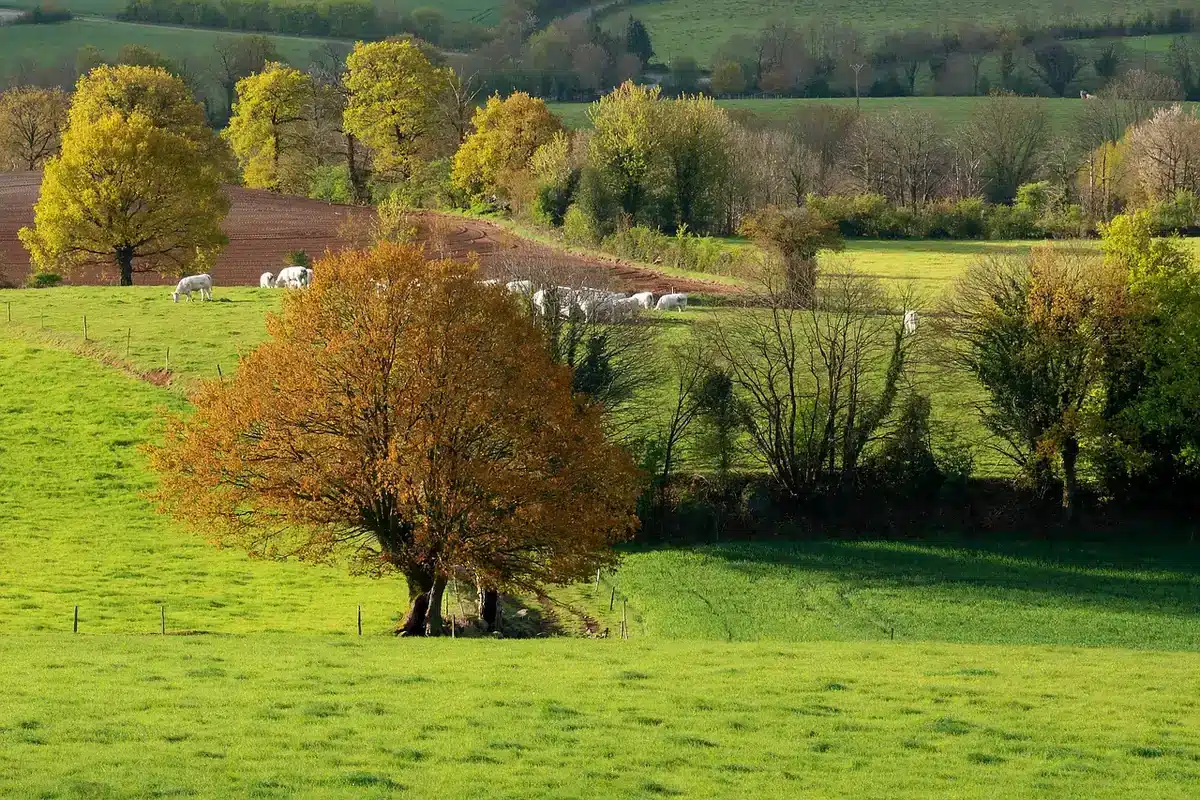
As one reviewer of the study noted, long-term cultural land management can increase habitat variety and therefore species richness — a contrast to the homogenizing effects of twentieth- and twenty-first-century intensive agriculture.
Why functional diversity matters
The study’s lead author emphasized that counting species is only part of the picture. Two landscapes could host similar numbers of plants while differing widely in the roles those plants play in ecosystem processes.
Functional diversity — the range of ecological roles species perform — influences how ecosystems respond to climate shifts and other stresses. The authors suggest that the medieval pattern of mixed land use may have supported greater functional variety, and therefore resilience.
Implications for today’s farming
Though the Black Death is a unique historical event, the research highlights how different farming styles affect biodiversity. The findings do not argue for returning to medieval methods wholesale, but they point to practical lessons for modern landscapes.
- Designing agricultural landscapes with more habitat variety could support both biodiversity and ecosystem services.
- Maintaining features such as hedgerows, ponds and patches of woodland may boost resilience.
- Measuring functional diversity, not just species counts, can help evaluate conservation success.
The paper cited is: Gordon J. D. et al., “Black death land abandonment drove European diversity losses,” Ecology Letters, 29(3), 2026 (DOI: 10.1111/ele.70325).