Show summary Hide summary
Meta is building Petal, a 4,300-mile transatlantic fiber cable designed to carry data at unprecedented scale — up to one million gigabits per second. If realized, the system would be the first to deliver petabit-class capacity across an entire ocean and could theoretically support simultaneous music streaming for about three-quarters of the global population.
A major jump in undersea bandwidth
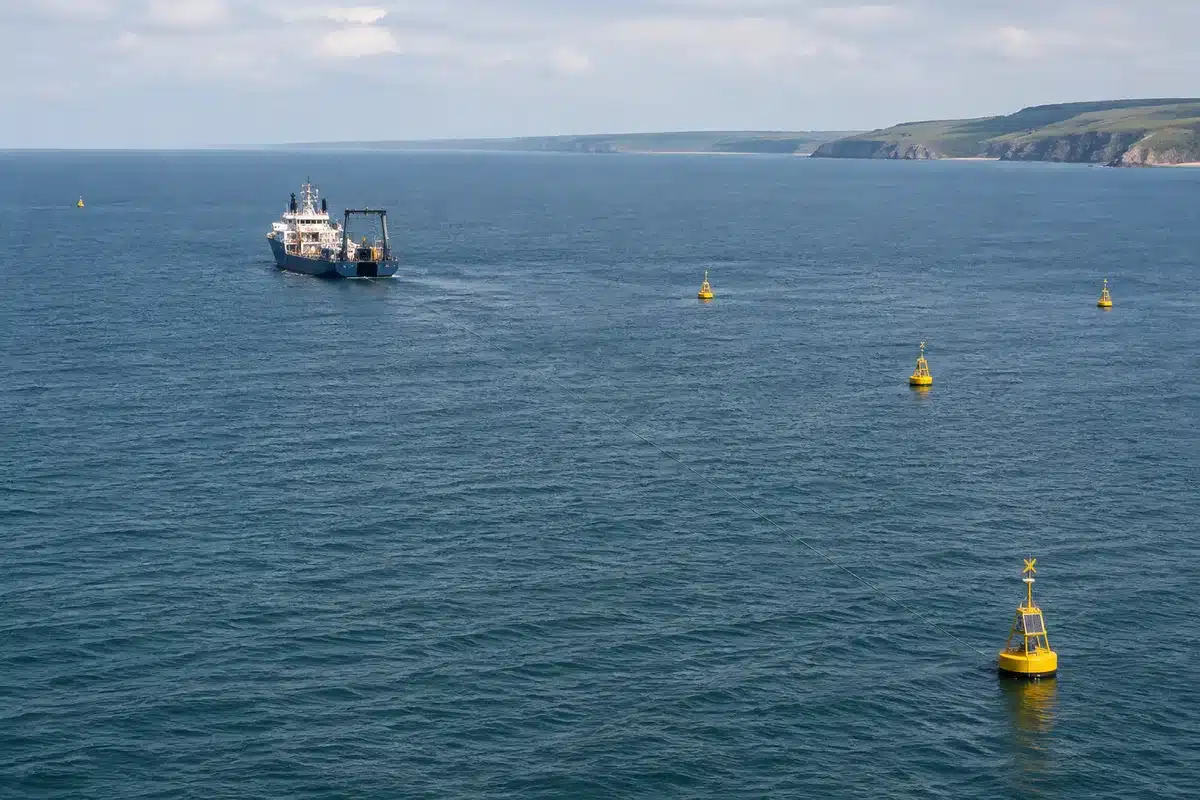
Petal stretches roughly 7,000 kilometers between the United States and France and is expected to enter service in 2029. Meta — the parent company of Facebook and Instagram — will finance and operate the cable, company representatives said.
Practical steps to change what Claude remembers
How the College Football Playoff reached 24 teams and reshaped the bracket

At peak capacity the link would move roughly 125 terabytes per second. To put that into everyday terms, Meta estimates the throughput equals about 25,000 high-definition films of 5 gigabytes each every second.
Meta also says Petal will offer roughly double the capacity of current subsea systems of similar length. “Achieving petabit-per-second capacity across a transoceanic submarine system represents a major technological milestone in the history of global telecommunications,” Eduardo Mateo, chief strategy officer of the Submarine Networks Division at NEC, said in a company statement.
How the cable achieves such speeds
Petal relies on multi-core fiber — an approach that departs from the single-core strands used in most current cables. Each fiber strand in Petal contains two cores, with optical signals traveling in opposite directions. That design lets one strand do the work normally handled by two single-core fibers.

The system will include 24 pairs of those dual-core fibers, giving it 96 individual cores in total. Meta engineers say that equates to the capacity of 48 conventional fiber pairs while keeping the cable physically compact; a single strand is about 125 micrometers across, roughly the thickness of a human hair.
Keeping signals strong over thousands of miles requires periodic amplification. Petal will use roughly 100 repeaters spaced along the route. At each amplifier the cable uses a “fan-in/fan-out” optical interface: the two cores in a dual-core strand are routed into separate single-core fibers for amplification, then recombined before continuing along the line.
This engineering lets Petal roughly double data capacity without a proportional jump in power consumption, Meta said.
Partners, past projects and the wider role of subsea cables
NEC will lead overall design and construction, while Sumitomo Electric will supply the fiber. Both companies have experience on major submarine projects.
Petal adds to Meta’s growing roster of undersea links. The company previously helped fund Marea in 2018, Amitié in 2023 and Anjana in 2025. By comparison, Marea supports about 192 terabits per second; Petal’s petabit-scale capacity would exceed that by more than five times.
Submarine cables carry the vast majority of global internet traffic. The International Telecommunication Union estimates undersea systems handle around 99% of international data flows, making projects like Petal central to how the internet scales and connects continents.