
Show summary Hide summary
Everyday movements that make chronic back pain spike — like lifting a leg or bending to pick something up — may engage brain regions tied to self-reflection, not just the circuits that register physical pain. A new imaging study suggests those flare-ups activate the brain’s default mode network, hinting that chronic pain can become woven into a person’s internal sense of self.
Movement-triggered flares light up a self-focused brain network
Researchers scanned the brains of adults with longstanding lower back pain and found an unexpected pattern. Instead of simply activating the usual pain-processing areas, movement-induced increases in pain were accompanied by higher activity in the default mode network — the network associated with daydreaming, autobiographical memory and self-referential thought.
Light-up digital shelf labels help Walmart shoppers and employees locate items
Former YMU Global exec opens London agency representing creators, including Topjaw’s Jesse Burgess

That pattern surprised the team because the default mode network normally quiets down during acute, attention-grabbing pain. “We did not expect [the default mode network] to be involved at all,” said Fadel Zeidan, a neuroscientist at the University of California, San Diego. He added that the researchers triple-checked their analyses to confirm the result.
How the researchers tested pain inside the scanner
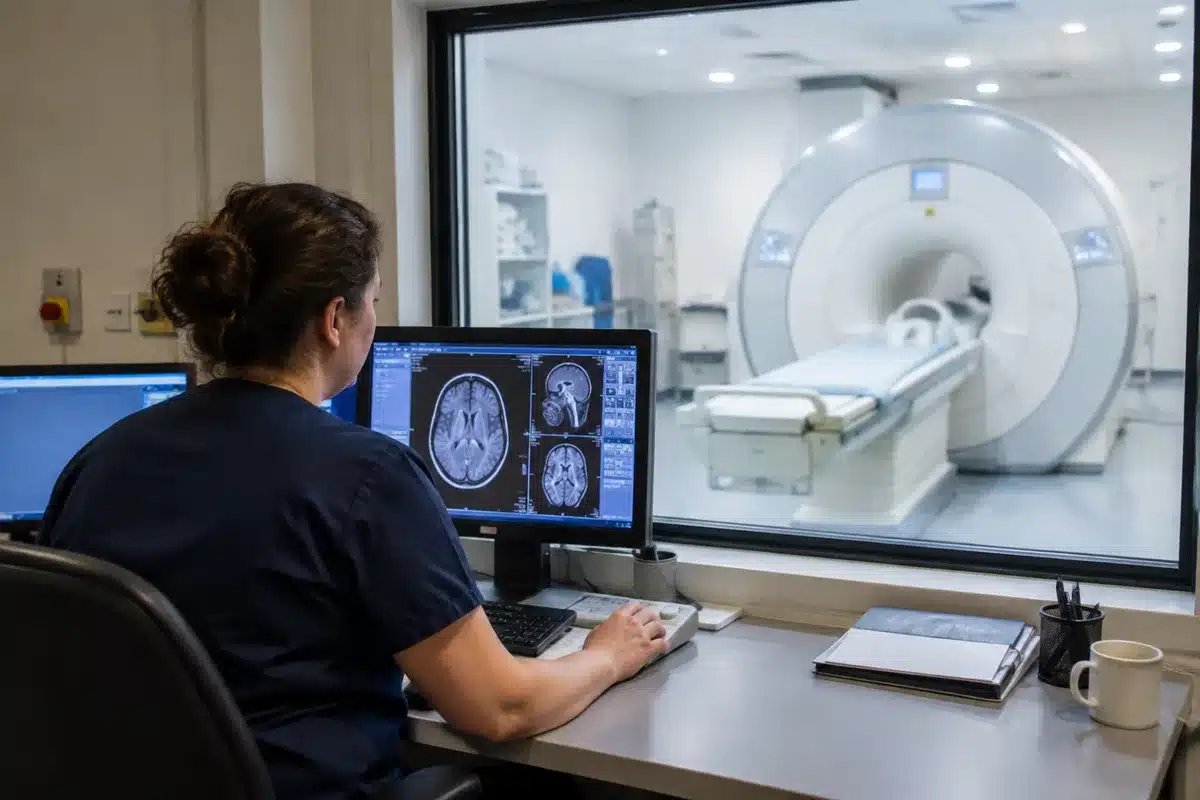
The study enrolled 114 adults with chronic lower back pain and used functional magnetic resonance imaging (fMRI) to track changes in blood flow as a proxy for neural activity. Participants had an initial baseline scan, then a researcher raised one leg until each person reported an increase in back pain, held the position for about 10 seconds and lowered the leg. Scans were taken immediately after the maneuver and compared with the baseline images.

On average, participants reported a 23% rise in pain intensity following the leg raise. During the movement itself, the team observed the expected increases in brain regions that process pain and movement. But scans taken right after the provocation also revealed heightened activity and connectivity in parts of the default mode network.
Different signature than heat-induced acute pain
The investigators ran a control test using painful heat applied to the calf, a standard method for studying acute pain in the laboratory. That heat stimulus produced the opposite effect in the default mode network: activity there decreased.
This contrast suggests the brain handles movement-evoked flare-ups of chronic pain differently from short-term, nociceptive pain. In other words, a movement that worsens ongoing back pain may recruit networks linked to identity and self-focused thought, rather than simply triggering an alarm and withdrawing attention from the self.
Connections between pain and self-perception
People in the study who reported more severe chronic pain also showed stronger coupling between the default mode network and regions that receive sensory input from the back. The authors interpret this as evidence that chronic pain can become integrated with self-related brain processes.
“This pain flare has almost become a part of who they are from an egocentric perspective,” Zeidan said. That framing aligns with the idea that persistent pain may reshape how individuals perceive their bodies and histories of pain.
Implications and next steps
Outside experts cautioned that the findings do not prove cause and effect. Katherine Martucci, a neuroscientist at Duke University who was not involved in the work, noted the study’s careful design — researchers avoided scanning during motion, instead comparing pre- and post-movement images — but said the observed activity might reflect lingering pain or anxiety after the leg raise.
The authors and commentators agree the results could inform treatment approaches if future work confirms the link between self-referential networks and chronic pain. Zeidan and colleagues are already exploring whether established therapies, such as mindfulness meditation or cognitive behavioral therapy for chronic pain, can modulate the default mode network and reduce flare-ups.
For now, the study — published Oct. 5 in the British Journal of Anaesthesia — provides imaging evidence that movement-evoked chronic low back pain engages brain networks beyond classical pain pathways. The findings add a new dimension to understanding why persistent pain can feel so personal and enduring.