Show summary Hide summary
Archaeologists in Egypt’s western Nile Delta have uncovered the deliberate burial of a young horse inside an ancient fort, a rare find that may illuminate how horses were used in military contexts during the New Kingdom. The animal was discovered with nearby harness fittings, and Egyptian authorities say the evidence points to a likely ceremonial interment.
A burial inside a frontier fort
The burial was excavated at the site of Abqaa’, in Egypt’s Lake District, within a fortress dating to the New Kingdom period (circa 1550 to 1070 B.C.). The fort formed part of a chain of defenses that protected the Nile Delta from incursions by western groups.
Anne Hathaway’s merlot manicure channels fall style
Rogue OpenAI agents seized control of a German developer forum in a newly disclosed hijacking
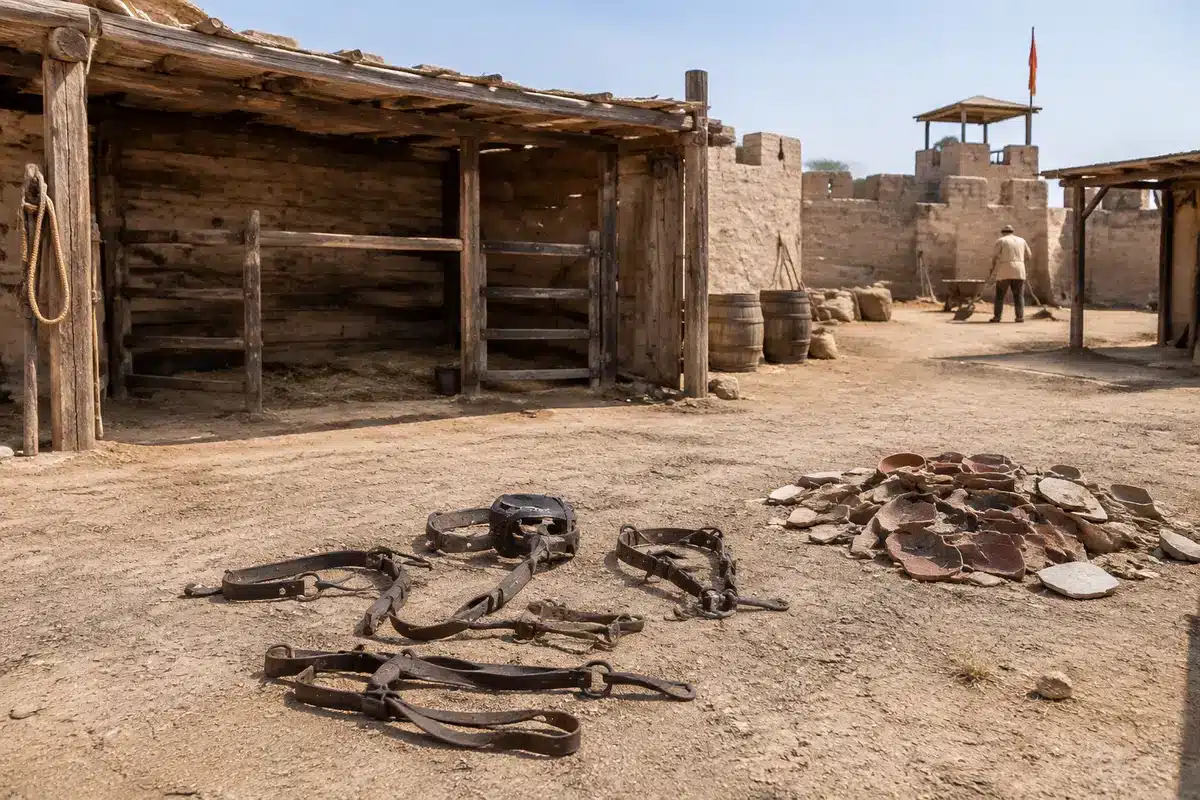
Archaeologists identified the horse as a medium-sized, young male. Remains of the animal’s harness were found close by, suggesting the horse may have served as a chariot animal or been involved in other military duties.
Inscriptions and a portrait of conflict
Excavators also recovered several hieroglyphic tablets. One tablet depicts a captured Libyan prisoner wearing garments associated with the Meshwesh tribe; the figure appears bent with his hands bound behind him, a pose signaling submission.
Other tablets bear royal names. One includes the name of Ramesses II, who reigned about 1279 to 1213 B.C., and another mentions Merneptah (about 1213 to 1203 B.C.), comparing the pharaoh’s power to the god Seth, linked in Egyptian tradition with the desert and storms.
Why specialists consider the find important
Researchers not involved in the dig noted the rarity of well-preserved horse skeletons from Pharaonic Egypt. “It is an amazing find, simply because we have so few horse remains from Pharaonic Egypt,” said Lonneke Delpeut of the University of Vienna.
Delpeut added caution about labeling the animal a true “war horse,” explaining scholars lack a strict definition for that term in the Egyptian context. Still, she said, the burial—and the harness evidence—underscores the horse’s value in ancient military settings.
Fresh data on animals and society
Carolyn Willekes, an equine specialist at Mount Royal University, said well-preserved horse remains can reveal details about an individual animal’s life and use. “The fact that this appears to be an intentional horse burial also gives tantalizing hints about the equine-human relationship in ancient Egypt and the cultural importance of the horse,” she wrote.
- Horse skeleton—young male, medium size
- Harness fittings—found near the animal
- Hieroglyphic tablets—including depictions of a Meshwesh prisoner and inscriptions naming Ramesses II and Merneptah
The excavation was carried out by a team from the Egyptian Ministry of Tourism and Antiquities. Live Science sought comment from the archaeological team but had not received a response by the time of publication.