Show summary Hide summary
A licensed metal detectorist in western Germany uncovered a substantial hoard of Roman silver coins that sheds fresh light on life along the empire’s northern frontier. The find — nearly 3.1 kilograms of silver denarii dating up to the reign of Emperor Hadrian — is now on public display and is helping archaeologists refine questions about why and when it was buried.
How the hoard came to light
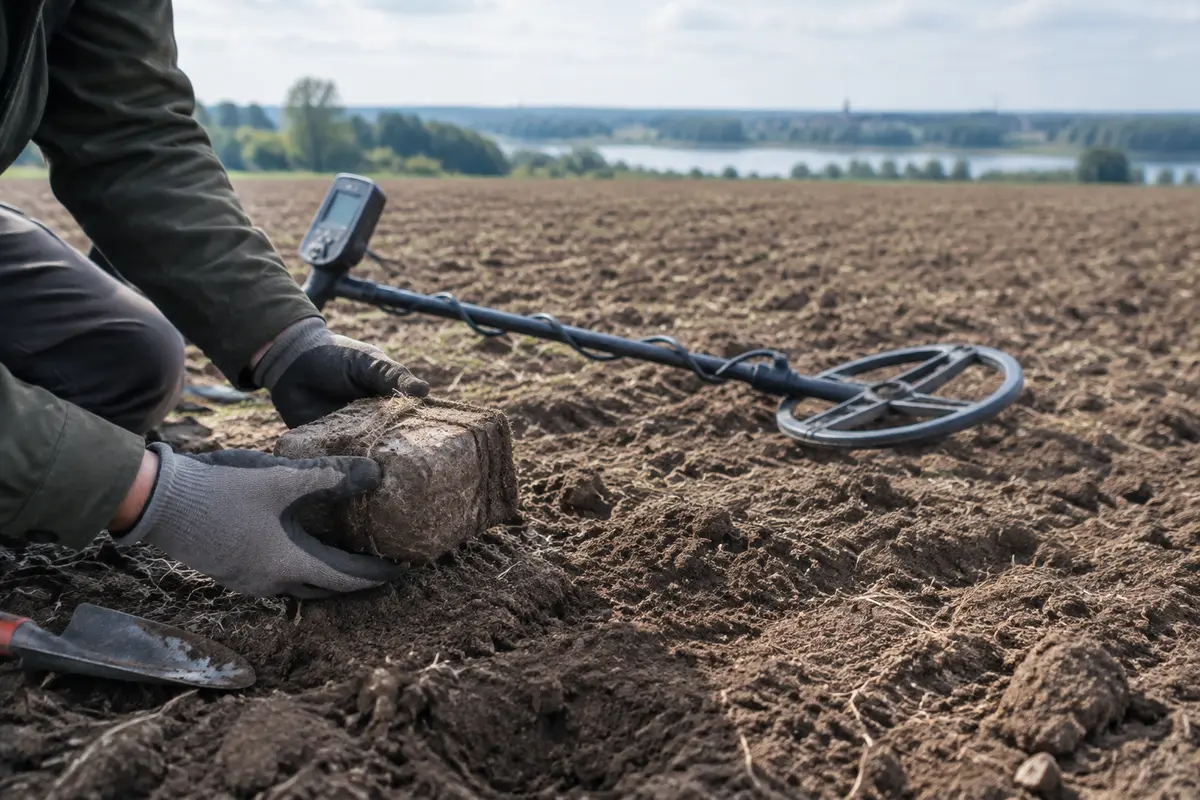
The deposit was found about a year ago in a field near Wesseling, a few miles south of Cologne, according to a statement from the Rhineland regional government. Hunter and detectorist Oliver Riedl stopped digging after recovering about 15 coins when his equipment indicated a much larger deposit beneath the surface.
Anne Hathaway’s merlot manicure channels fall style
Rogue OpenAI agents seized control of a German developer forum in a newly disclosed hijacking

“It was clear to me that there was something bigger in the ground here,” Riedl said in the statement. He is licensed by the state and trained by regional archaeological authorities; the statement contrasted his lawful behavior with that of illegal detectorists who can damage archaeological contexts.
Archaeologists removed the block of earth containing the hoard intact, X-rayed it, and then opened it in a controlled excavation. In total they recovered 934 Roman silver coins, which are now held and exhibited at the Rhineland Regional Museum in Bonn (LVR-Landesmuseum Bonn).
What the coins reveal
The hoard comprises 934 silver denarii and weighs almost 7 pounds (3.1 kilograms). The coins span more than three centuries: the earliest pieces were minted in 148 B.C., during the Roman Republic, while the latest dates to 124 or 125 A.D., in Hadrian’s reign.
Most of the coins date to the Flavian period — the rule of Vespasian, Titus and Domitian from A.D. 69 to 96 — but the presence of the later Hadrianic issue establishes the latest possible burial date for the group.
Location matters: frontier signals
Numismatist Marjanko Pilekić of the German Historical Museum, not involved in the excavation, noted the find’s position just inside the empire’s northern boundary. The site sits close to the Rhine and the line of the Roman limes, the frontier zone that separated Roman provinces from the territories the Romans called the Barbaricum.
Because the hoard was located within the Roman border, Pilekić told Live Science that archaeologists can “cautiously assume that the hoard was buried not long after the most recent coin was minted.” He contrasted this with hoards found outside the empire, which are sometimes buried much later.
Who hid the coins — and why?
Erich Claßen, head of archaeology for the Rhineland regional government, suggested the owner may have accumulated the bulk of the coins around A.D. 100 but did not bury them until Hadrian’s time. “We can only speculate about the motives, but very likely someone wanted to keep this money safe,” he said.
Regional archaeologist Rahel Otte, who led the excavation, emphasized the hoard’s economic scale. She noted that a Roman legionary under Hadrian earned about 300 denarii per year, with roughly half taken out for food and equipment. That level of earnings implies a long period of saving: “a legionary would have had to save all his available money for about six years to accumulate the Wesseling treasure find,” she said.
Otte added that the individual who buried the coins never returned to retrieve them. The owner might have been someone living on a nearby Roman estate, but the identity and fate of the depositor remain unknown.
Scientific care and public display
Because the coins were excavated under official supervision and conserved with scientific methods, they retain far more archaeological information than items recovered by illicit digging. The hoard’s excavation, documentation and X-ray imaging have preserved context that helps researchers interpret its date, composition and possible reasons for burial.
The full assemblage is now on display at the LVR-Landesmuseum Bonn, where scholars and the public can study a rare, well-preserved snapshot of Roman-era currency on the empire’s Rhine frontier.