
Show summary Hide summary
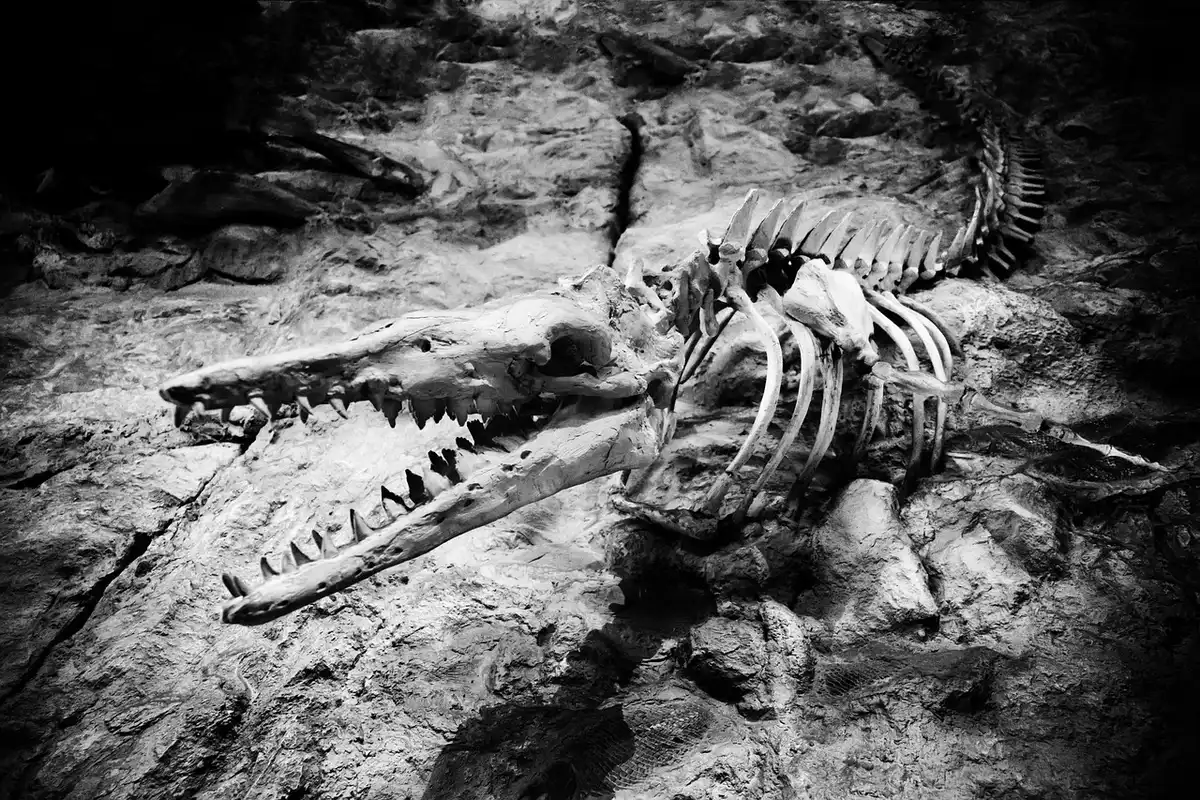
A skull fragment that sat unnoticed in a museum drawer for nearly a century has been identified as a previously unknown predator: a European member of the little-understood group called megaraptors. The find, described in a study published in the journal Royal Society Open Science, fills a notable gap in the fossil record and offers new clues about how these hunters spread across ancient continents.
Forgotten specimen, fresh investigation
The fossil was first collected on the southern English coast of the Isle of Wight in 1924 and later entered the Natural History Museum in London, where it remained largely overlooked. Researchers only recently reexamined the piece while studying dinosaur braincases.
Burger King turns to local franchisees to jump-start its U.S. comeback
Do you want a rewritten headline for each of the listed items, or a single new headline covering the whole list?

Scientists used micro-CT scanning to peer inside the skull and produced detailed 3D reconstructions of the cavity that once held the brain. That internal anatomy revealed several distinctive features — including an almost oval foramen where the spinal cord enters the skull and an unusual hourglass-shaped ridge at the rear of the braincase — that set the specimen apart from known theropods.
“It is a real mystery that this fossil was overlooked for so long, sitting in a drawer for nearly 100 years,” study lead author Cassius Morrison of University College London said in a statement.
A small but formidable megaraptor
Researchers placed the skull within the family tree of megaraptors, a clade of two-legged carnivores related to, but anatomically different from, tyrannosaurs. Megaraptors are thought to have relied on powerful forelimbs and large, curved claws to grapple prey rather than the bone-crushing bites typical of later tyrannosaurs.
The team named the new species Invictibellatrix amberina. The genus name mixes Latin terms meaning “unconquered” and “female warrior,” while the species name refers to amber found near the fossil.
Based on comparisons with related species, the animal likely measured roughly 3 to 4 metres (10 to 13 feet) long, stood about 1.5 metres tall at the hip, and weighed an estimated 200 to 300 kilograms. That makes it one of the smaller known megaraptors. The skull does not preserve the arms or claws, but relatives suggest claws of about 10 to 20 centimetres were possible, and the researchers propose the animal may have borne feathers — a trait that cannot be confirmed from this specimen alone.
“It was not the apex predator of its time, but for humans this dinosaur would have been more dangerous than a T. rex,” Morrison said, noting humans would have fallen well within its prey size range.
Putting a missing piece into dinosaur biogeography
Evolutionary analyses in the study support placing Invictibellatrix within Megaraptora and suggest a wider geographic distribution for the group than previously documented. Until now, European evidence of megaraptors was lacking, leaving questions about their early movements unanswered.
The study’s models indicate that megaraptors may have originated in Asia and reached Europe roughly 130 million years ago. From Europe the group could have continued southward — moving through regions that later became Africa and into Gondwana — using temporary land connections across the shallow Tethys Ocean.
Co-author Charlie Scherer, a doctoral student at UCL, said the discovery provides the first direct evidence that megaraptorans inhabited Europe and supports the idea they dispersed to southern landmasses via such routes. But the authors caution that the precise migration pathways remain uncertain, as do the causes for the group’s disappearance from northern areas; climate shifts or competition with other predators could have been factors.
“Work like this shows the exceptional value of working with historical museum collections where there are still many discoveries to be made,” Paul Barrett of the Natural History Museum in London, a co-author on the study, said in the statement.