Show summary Hide summary
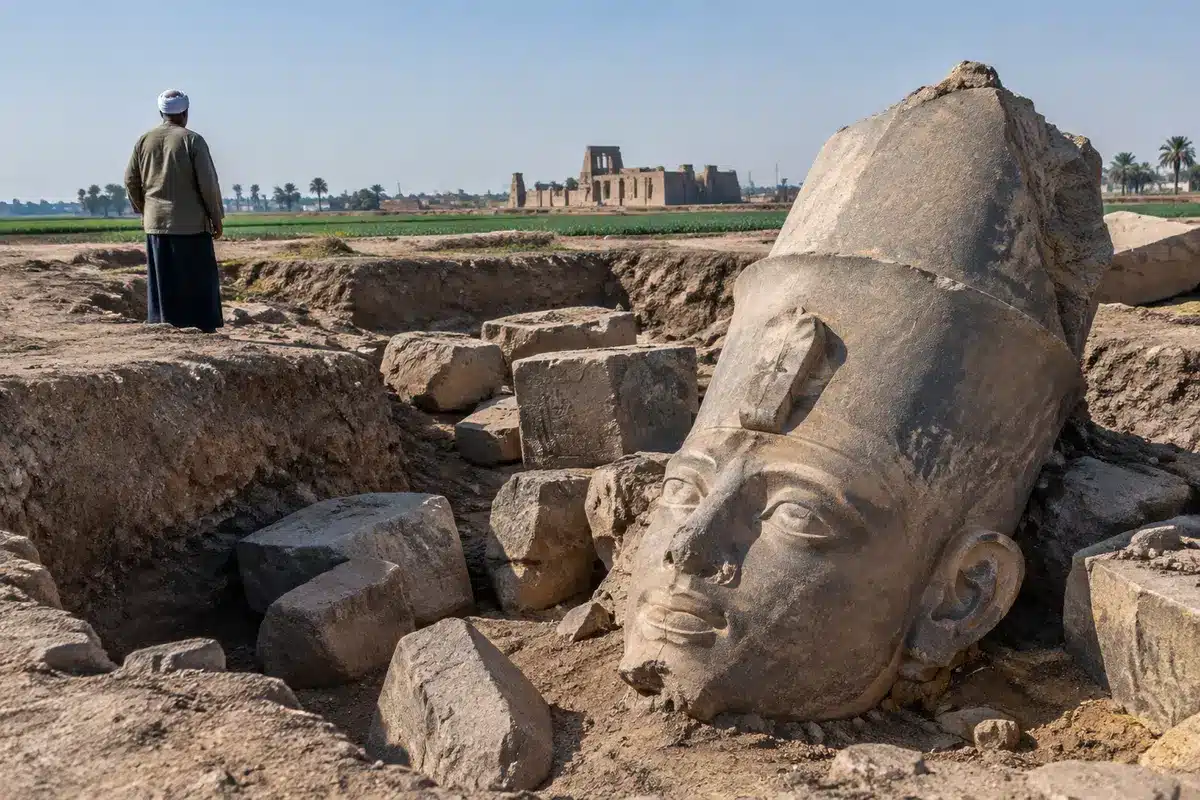
A villager working his field in northern Egypt uncovered the shattered remains of two enormous statues of Pharaoh Ramesses II, one of which would have stood roughly 28 feet tall. The find, reported to the Egyptian Ministry of Tourism and Antiquities, adds new evidence of the pharaoh’s building activity at the temple site of Behbeit El Hagar.
The discovery
The local farmer, identified by officials as Khaled el-Shahat, alerted antiquities authorities after finding the fragments. The ministry said a team was dispatched to excavate and study the pieces at the site in Behbeit El Hagar.
Light-up digital shelf labels help Walmart shoppers and employees locate items
Former YMU Global exec opens London agency representing creators, including Topjaw’s Jesse Burgess

Egyptologists say the statues were found on the western side of the temple complex. Behbeit El Hagar is already known for a temple dedicated to the goddess Isis, and archaeologists had previously recorded architectural fragments there bearing Ramesses II’s name.
What the fragments show
Most of the larger monument survives only as a massive head and portions of its supporting pillar. The head measures about 5.2 feet (1.6 meters) tall and wears the pharaonic double crown that symbolizes the union of Upper and Lower Egypt. When intact, the statue is estimated to have reached roughly 8.5 meters (about 28 feet) in height.
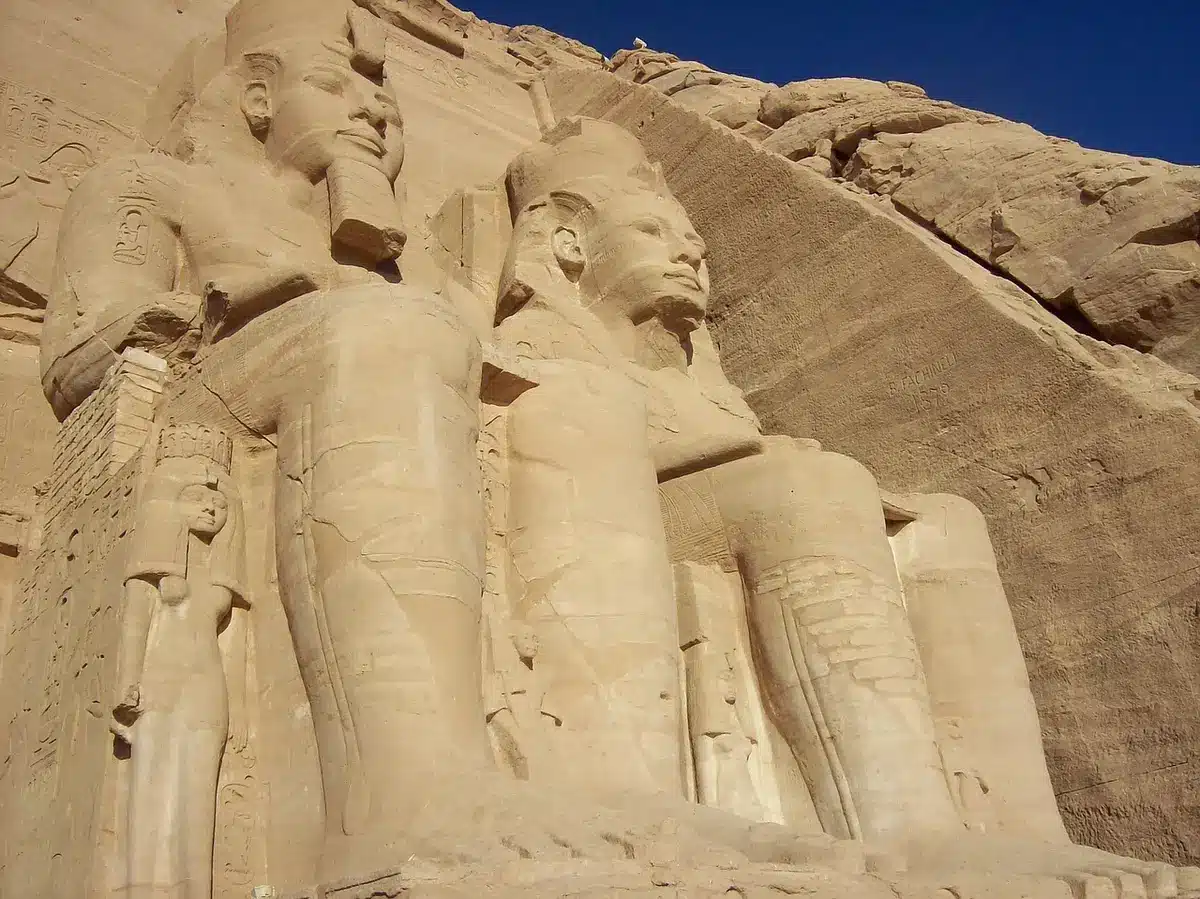
A hieroglyphic inscription on the statue’s back pillar records the ruler’s Horus name, Hor-Ka-Nakht-Mery-Maat. Egyptologist Joyce Tyldesley, in her book Ramesses: Egypt’s Greatest Pharaoh, translates that name as “Strong Bull, Beloved of Right, Truth.”
The second figure, about 7.9 feet (2.4 meters) tall, also appears to represent Ramesses II. Officials said this statue shows the king wearing the striped Nemes headcloth commonly displayed in royal portraiture.
Near the sculptures, archaeologists found a block of pink granite inscribed with titles naming Ramesses II as “King of Upper and Lower Egypt” and as the “Son of Ra,” the sun god.
Context and next steps
Ramesses II reigned for 66 years, from about 1279 to 1213 B.C., and directed extensive building campaigns across Egypt and into regions as far north as modern Syria. Finds like these reinforce the view that he invested heavily in the Behbeit El Hagar complex.
Mahmoud Emam, an Egyptologist at Cairo University who has previously worked on material from the site but was not part of this excavation, noted the earlier discovery of fragments bearing the pharaoh’s name. In a 2017 paper he and colleagues argued for more investigation at the temple and warned that the site faces pressure from urban expansion.
The ministry’s statement announcing the new finds was translated for publication. Live Science contacted the excavation team for additional information but had not received a reply by the time of publication.