
Show summary Hide summary
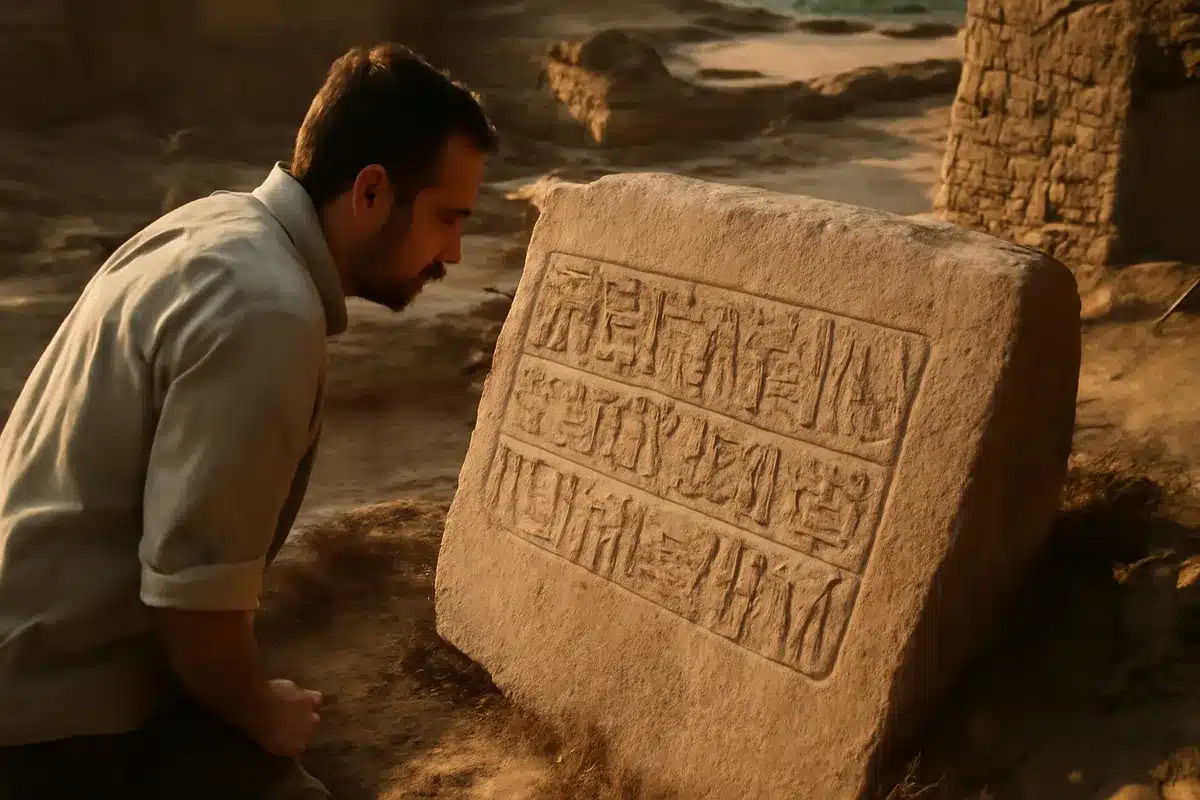
A 3,200-year-old inscription uncovered at Tell Abu Seifi may point to the location of a long-lost Egyptian city called Mesn, archaeologists and Egypt’s Ministry of Tourism and Antiquities say. The find, made beside an ancient military road, ties the site to royal activity from the era of Ramesses II and adds weight to a decades-old search for the city’s remains.
The inscription and the temple remains
Excavators working at Tell Abu Seifi, near the Suez Canal at the edge of the north Sinai Desert and eastern Nile Delta, uncovered an inscription dating to roughly the time of Ramesses II that names the falcon-headed god Horus as “Lord of the City of Mesn.” The announcement came in a translated statement from the Egyptian Ministry of Tourism and Antiquities.
Ultra-thin women smoking cigarettes are making a comeback as a fashion trend
Windows Memory Diagnostic explained: what the test does and how to read results

The team also identified what appears to be a temple dedicated to Horus at the site, but the structure is badly damaged. As Hesham Hussein, director general of Delta and Sinai Archaeology at the ministry and a leader of the excavation, told Live Science, “the temple was almost completely destroyed,” a condition that limits what researchers can learn from the remains.
Why researchers link Tell Abu Seifi to Mesn
Archaeologists point to several pieces of evidence that connect Tell Abu Seifi with the name Mesn (also spelled Mesen). In addition to the newly reported Ramesses-era inscription, earlier finds at the site include a Ptolemaic-period bronze seal and coffins bearing the phrase “Horus, Lord of Mesen.” Those repeated invocations suggest a long-standing cultic association between Horus and this place.
Scholars note another clue: the pedestal of a statue matching the description in the inscription was previously recovered at the site. Taken together, these elements make a compelling case that Tell Abu Seifi could be the ancient city referred to as Mesn.
The site’s strategic setting: the Way(s) of Horus
Tell Abu Seifi sits alongside the route ancient Egyptians called the Way(s) of Horus, a fortified road connecting the eastern Nile Delta to the southern Levant. That corridor was lined with forts and served as a staging ground for military campaigns into Canaan, Lebanon and Syria.
Peter Brand, a history professor at the University of Memphis who was not part of the excavation, said the location fits expectations for Mesn. He suggested Mesen near modern Qantara may have been a “jumping off” point for Egyptian armies, and he highlighted references in the new inscription to Ramesses II restoring a statue of Horus of Mesen—an act that echoes the previously found statue pedestal.
Scholarly caution and open questions
Not all experts are ready to accept Tell Abu Seifi as a definitive identification of Mesn. James Hoffmeier, an archaeologist at Trinity International University, called the evidence promising but said more data—especially ceramics and other dating material—are needed to be certain.
Other researchers emphasize regional complexity. Gregory Mumford, an anthropology professor at the University of Alabama at Birmingham, pointed out that inscriptions naming Mesn have appeared at multiple sites, including a fortress at Kom el-Qolzoum on the Suez and a fort at Tjaru in northwest Sinai. He suggested Mesn might have referred to a wider area rather than a single settlement.
Additional experts who were not involved in the dig described the discovery as exciting but premature to finalize. Oren Siegel of the University of Toronto and Shirly Ben Dor Evian of the University of Haifa said they would wait for more detailed publication, especially full analyses of the hieroglyphic texts and associated finds.
Next steps for the excavation
Egyptian authorities say research at Tell Abu Seifi is ongoing. Hussein cautioned that because Mesn’s archaeological identification has been uncertain, the team cannot yet estimate the city’s original size or population with confidence. He also noted historical records indicate a second settlement named Mesn once existed in southern Egypt, a detail that further complicates identification efforts.
For now, the inscription and the supporting finds strengthen the link between Tell Abu Seifi and the name Mesn, but archaeologists agree that more fieldwork and published analysis are required before the long-lost city’s identity can be confirmed.