
Show summary Hide summary
A new analysis of plant remains trapped in rocks at White Sands National Park suggests people living in the region about 23,000 years ago witnessed dramatic environmental shifts during the coldest phase of the last ice age. The study links ancient pollen and other organic markers to changing lakeshores, forests and grasslands that would have reshaped where people and animals could live and forage.
Pollen, waxes and ancient footprints
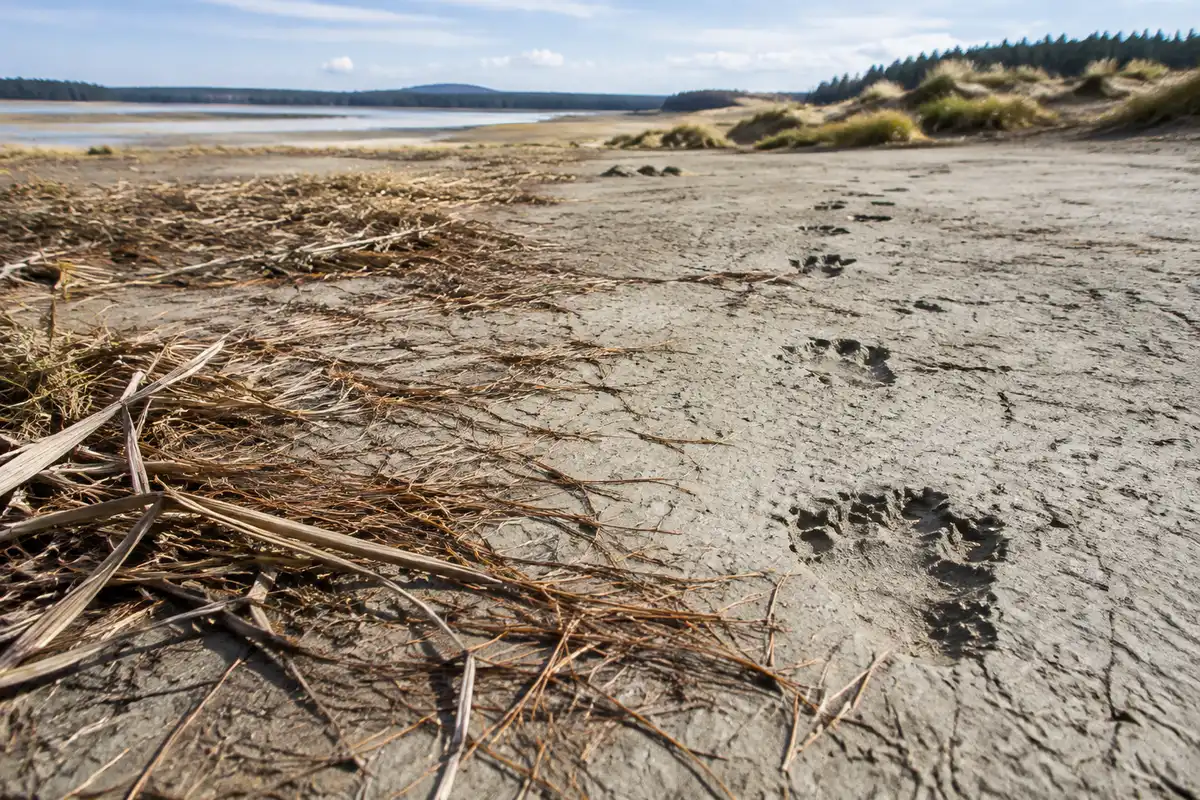
Researchers examined microscopic pollen, leaf waxes and bacterial membrane lipids preserved in sediment layers at White Sands, the New Mexico site that contains what some scientists argue are the oldest human footprints in the Americas. Those tracks were previously dated to roughly 21,000–23,000 years ago — a timing that remains contested because it is much earlier than most other Indigenous sites on the continents.
Light-up digital shelf labels help Walmart shoppers and employees locate items
Former YMU Global exec opens London agency representing creators, including Topjaw’s Jesse Burgess

The new work, published Oct. 14 in Science Advances, uses the suite of organic indicators to reconstruct vegetation and water levels over thousands of years. The team stresses the footprint layers show human presence, but they do not provide a continuous behavioral record; rather, they record discrete moments when people left traces in wet sediment.
Rapid environmental shifts within human lifetimes
The sediment record points to a substantial lake at White Sands around 24,200 years ago, surrounded by forests of conifers such as Pinus, Abies and Picea. Over the next two thousand years, temperatures rose, the lake contracted and those cold-adapted trees gave way to oak (Quercus) and sagebrush communities.

Study co-author Kathleen Springer of the U.S. Geological Survey commented that early people in the area would have seen these changes unfold within a single lifetime, effectively witnessing a landscape transform on human timescales.
What this means for early Americans
The White Sands footprints have fueled debate about the timing and route of the first migrations into North America. Some researchers interpret the evidence as consistent with an earlier arrival from Asia via the Bering region, challenging the long-standing view that widespread human settlement began near 13,000 years ago. The authors say multiple lines of evidence are accumulating in support of a much earlier human presence, even as some dating methods remain disputed.
Beyond the controversial early dates, the site documents repeated human use across millennia. The park preserves tracks from different periods, including a caregiver and toddler dated to about 10,000 years ago. Archaeologists have also reported impressions interpreted as sled-like drag marks — possible traces of a travois-like transport device — and footprints alongside remains of Pleistocene megafauna such as mammoths and giant ground sloths.
Limitations and the record’s value
The authors emphasize caution when interpreting footprints. As paleoanthropologist Sally Reynolds notes, these prints are individual snapshots rather than an ongoing diary of daily life. They show moments when people, soft sediment and chance coincided to leave impressions that survived to be read by scientists thousands of years later.
The study’s combination of pollen, waxes and other organic molecules offers a more detailed environmental backdrop for those snapshots, helping researchers better understand how climatic shifts during the Last Glacial Maximum (about 26,500 to 19,000 years ago) affected human occupation and resource availability at White Sands.