Show summary Hide summary
New analyses of microscopic zircon crystals show that the Ames impact structure in northern Oklahoma is far younger than previously believed — and that the collision took place during a major Late Devonian extinction. The finding shifts the crater’s place in Earth’s history and prompts fresh questions about how local impacts may have interacted with global environmental change.
Buried, hidden and only discovered by accident
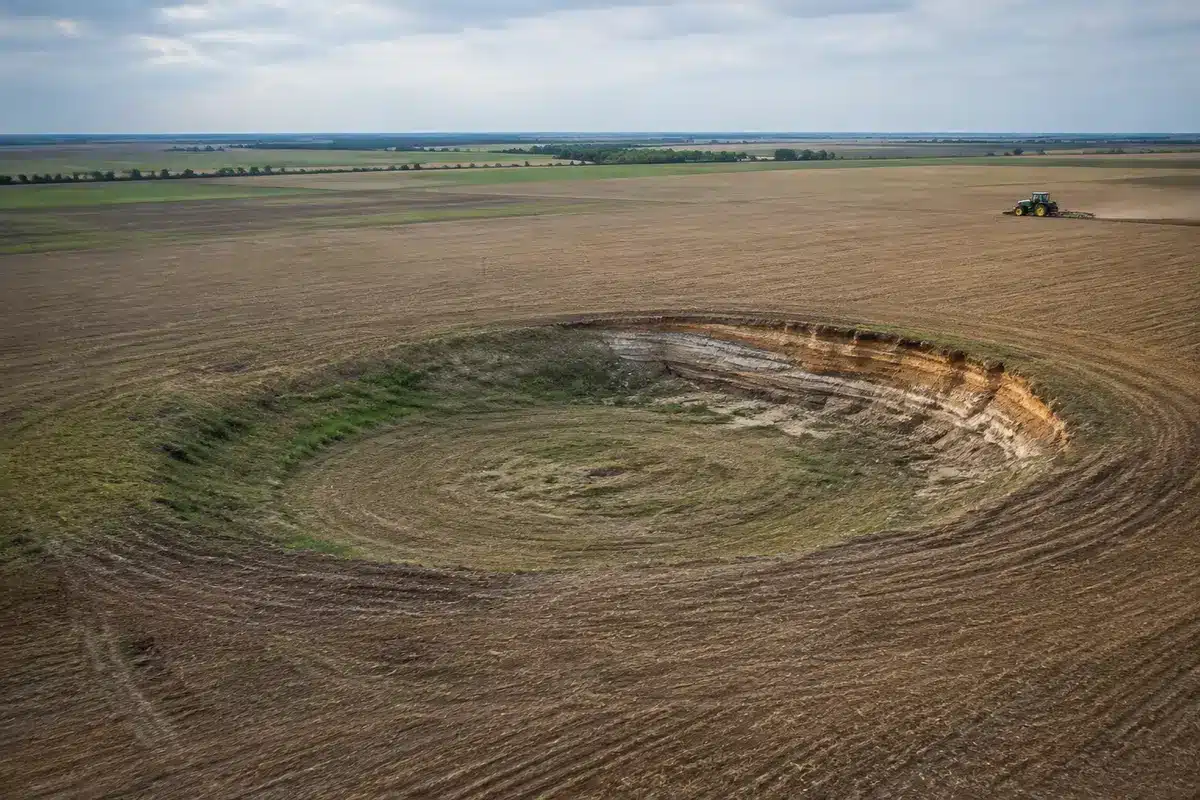
The Ames structure, a roughly 10-mile (16‑kilometer) circular feature beneath northern Oklahoma, leaves no visible mark on the landscape today. Buried under layers of ancient seafloor sediment, the crater was found in 1991 when oil-drilling operations unexpectedly struck the underlying impact zone. At about 10 miles across, it ranks among the largest known impact structures in the United States.
Mid-stage trial shows Eli Lilly combo delivers bigger weight loss, company says
Russell Brand attorney asks watchdog to review his conduct after attacking reporter who exposed him

Researchers estimate the space rock that formed Ames was on the scale of the Eiffel Tower and struck Earth at more than 70,000 mph (about 110,000 km/h). At the time of impact the area was a shallow marine environment; subsequent sedimentation quickly concealed the structure from the surface.
Dating the event with tiny crystals
Previous work had placed Ames in the same time frame as the Ordovician meteor event, roughly 467 million years ago. But a team led by Elizabeth Catlos at the University of Texas at Austin re-examined the crater using a different window into deep time: fracture patterns and radioisotopic signatures in zircon crystals recovered from the subsurface.

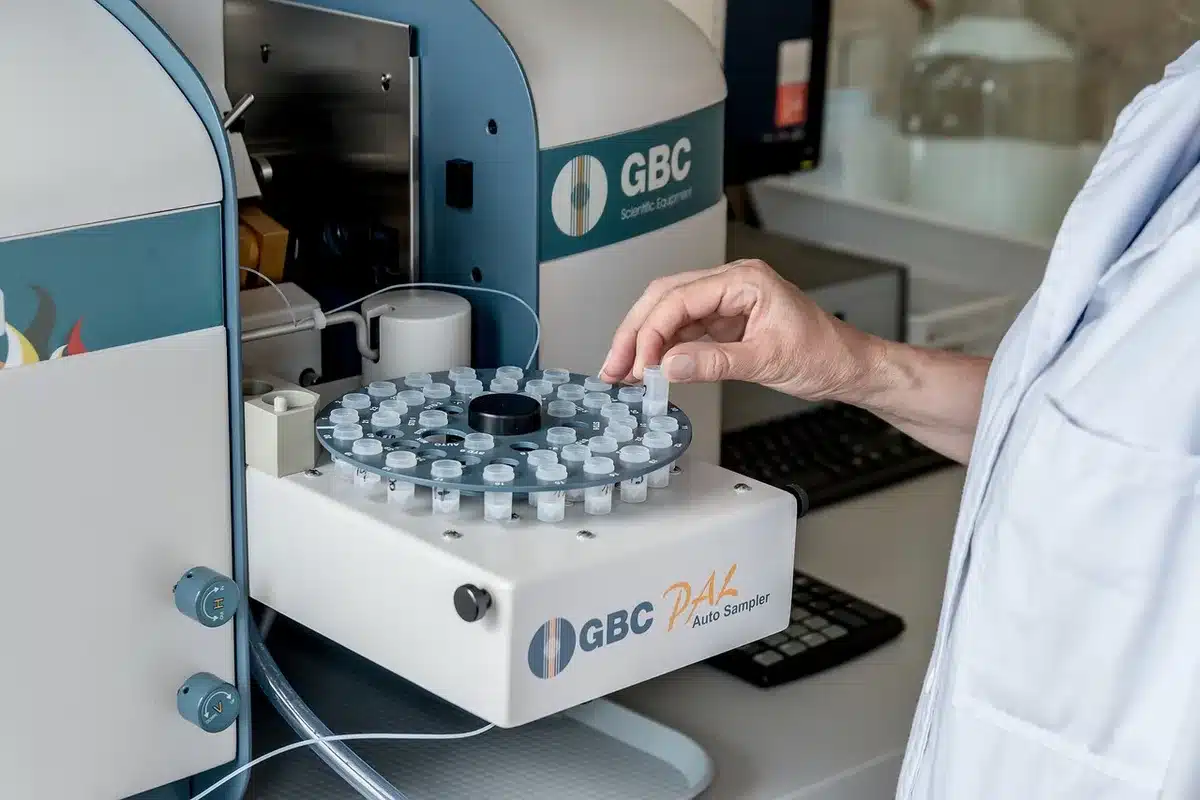
Zircons, a durable form of zirconium silicate found in many rocks, preserve evidence of extreme pressure and heat. By reading that preserved record the researchers determined the Ames impact actually occurred about 370 million years ago — nearly 100 million years later than the earlier estimate. The results appear July 7 in the journal Meteoritics and Planetary Science.
“No matter what technique we used, it was coming back to this younger signal,” Catlos said in a statement accompanying the paper.
Putting Ames into the Late Devonian
The revised age moves Ames out of the Ordovician cohort and into the timeframe of the Frasnian‑Famennian mass extinction, sometimes called the Kellwasser event. That extinction pulse, which began around 372 million years ago and unfolded over several million years, saw significant losses of marine biodiversity — scientists estimate up to half of marine species disappeared as oceans became depleted of oxygen.
The authors stress that the Ames impact was not the trigger for the global die‑off. Still, they note that a large impact would have lofted dust and aerosols into the atmosphere, potentially amplifying regional or short‑term cooling and contributing to environmental stresses already driven by volcanic activity and other factors.
What this means for the record of impacts
Using zircons to refine impact ages is an increasingly common practice, and similar studies have led to substantial revisions for other structures. The paper notes recent reassessments elsewhere — studies that shifted previously inferred ages for large craters by tens or even hundreds of millions of years — underscoring how sensitive impact chronologies are to the dating techniques applied.
“These small crystals allow us to go back in time and learn about the major changes to Earth’s ancient landscapes,” said co‑author Danny Stockli, dean of the Jackson School of Geosciences at UT Austin. He added that applying the same approach to more North American impact sites could produce a clearer timeline of when and how these collisions affected the planet.
Research and recognition
The study, which includes multiple co‑authors and radioisotopic analyses, presents new constraints on North American impact chronology. The authors dedicate the work to co‑authors Andrew Parisi and Michael Brookfield, who died before its publication.
The full citation is provided in the published paper: Catlos, E. J., Parisi, A. F., Brookfield, M. E., Erickson, T., Gulick, S. P., Schmitt, A. K., Stockli, D. F., Miggins, D. P., Ruchte, B., & Cloos, M. (2026). The Ames impact structure, Oklahoma: New radioisotopic constraints and implications for North American impact chronology. Meteoritics and Planetary Science, 61(8), 2103–2139. https://doi.org/10.1111/maps.70191