
Show summary Hide summary
A small, enamel-decorated belt buckle unearthed in a forest in southeastern Ukraine offers a rare glimpse of military life on the edge of the Roman world. Archaeologists say the artifact likely dates to the second or third century A.D. and may have belonged to a mounted warrior near the province known as Roman Dacia.
The discovery
Local residents found the roughly square metal buckle in the Tsetsyn Forest and handed it to Antonii Moisei, a professor at Bukovinian State Medical University, according to a translated statement from the researcher. The piece measures about 0.8 inches (2.1 centimeters) on each side and bears enamel in shades of teal, blue and yellow.
Chains double down on menu quality, hoping to win back diners
Jenn Kuzmyk to step down from Banff World Media Festival role after almost a decade
Dating and manufacture
Moisei dates the object to the second–third centuries A.D., a period when this area lay within or close to the Roman province of Roman Dacia. He links the buckle’s decorative style and metalwork to provincial Roman craft traditions rather than to a purely local workshop.
Other items found
- The square enamel buckle
- A decorative belt fitting
- Three small, round metal objects likely from the same belt
Possible owner and origins
Who wore the belt remains uncertain. Moisei suggests it could have belonged to a horse-mounted Sarmatian warrior from the Black Sea region. The Sarmatians were a collection of tribes living outside the Roman borders—across central Ukraine, southern Russia and the Balkans—and historical records show some fought Rome while others served as mercenaries.
The researcher also notes the metal fragments could have arrived by trade or been taken as a trophy after conflict. His team continues to analyse the pieces to determine whether they were made by Sarmatian hands or produced within Roman-influenced workshops.
Historical context and significance
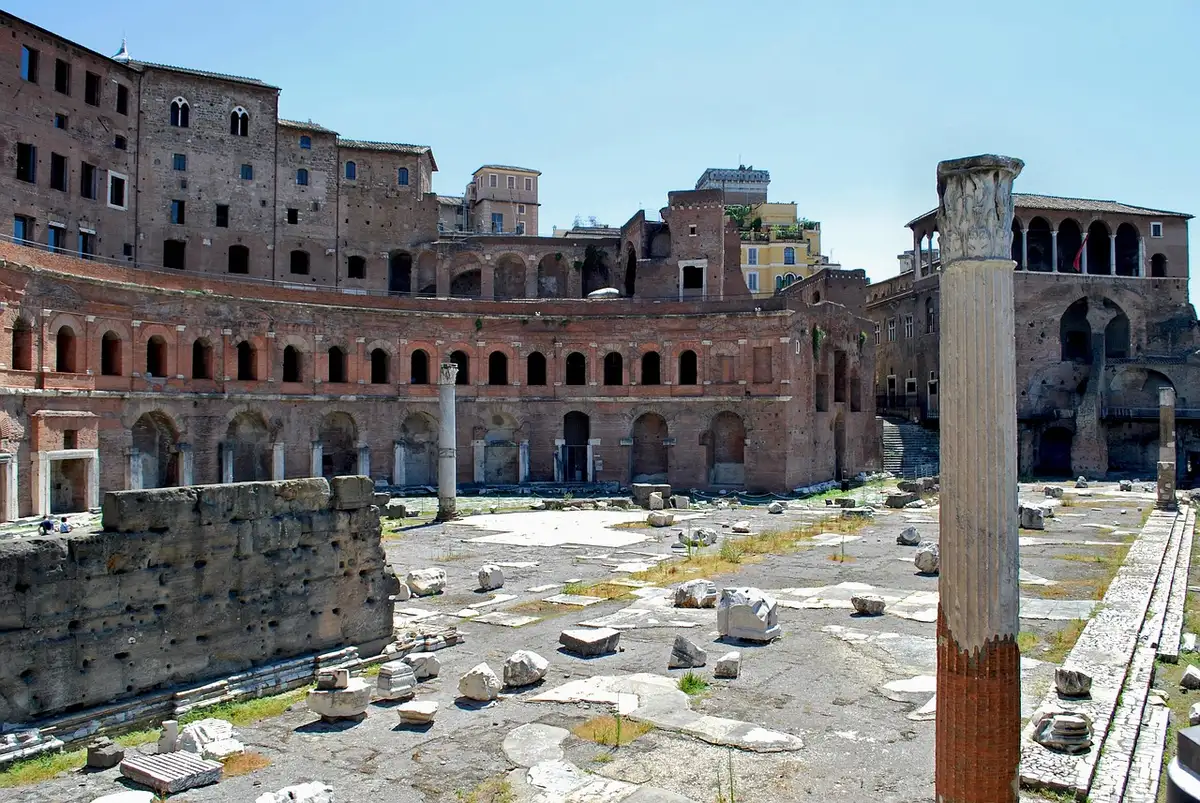
The find arrives against a backdrop of long-standing Roman campaigns in the area. Under Emperor Trajan, Rome fought the Dacian Wars (A.D. 101–102 and 105–106), defeated the Dacian kingdom, and annexed its territory — events famously commemorated on Trajan’s Column in Rome.
Regardless of the buckle’s precise origin, specialists say the group of belt fittings adds concrete material evidence of military and cultural contact on the empire’s periphery. Further study could sharpen understanding of how Roman forces, local Dacians and nomadic groups interacted during periods of warfare and exchange.
What comes next
Moisei is continuing laboratory work and comparative analysis to refine the artifact’s provenance. Future results may clarify whether the objects represent a Sarmatian warrior’s gear, a provincially-made Roman accessory, or an item that changed hands through trade or conflict.