
Show summary Hide summary
A faint hydrogen chloride signal near Mars’ enormous Alba Mons volcano may point to magma beneath the surface. If the gas is coming from volcanic vents, the area could also offer clues about whether Mars once had environments suitable for life.
A gas signal near Alba Mons
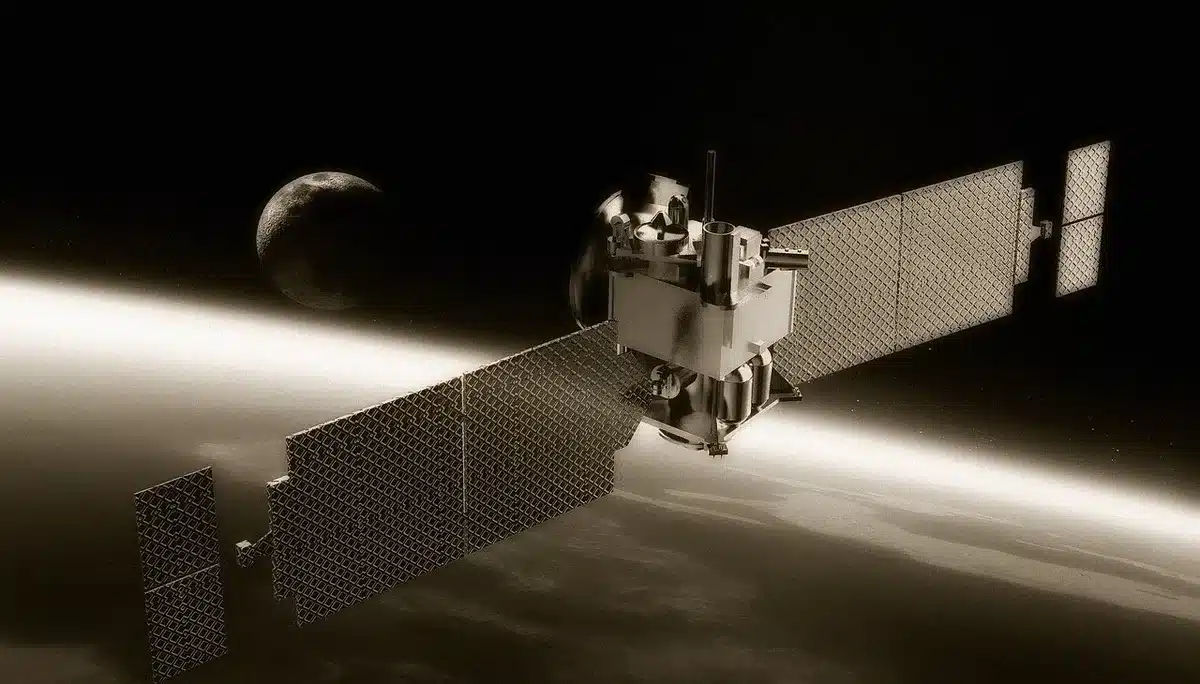
The European Space Agency’s ExoMars Trace Gas Orbiter detected hydrogen chloride in Mars’ atmosphere. Researchers now report that repeated observations place a possible source near fissures around Alba Mons, the Red Planet’s largest volcano by surface area. Olympus Mons is taller.
Poppi’s founders take a new beverage venture, Jetty, into Gatorade’s market
Blueprint and Lucky Red team up for English-language remake of German comedy «No Hit Wonder»
The team interprets the localized gas as a possible release from magma below the Martian surface. The explanation remains a hypothesis, but the signal’s location and changing strength are consistent with a brief gas emission rather than routine atmospheric chemistry, according to the researchers.
Hydrogen chloride was first detected in Mars’ atmosphere in 2021. At the time, scientists were cautious about connecting it to volcanoes: the gas seemed seasonal, was not clearly concentrated near a volcanic region, and other expected volcanic gases, including sulfur, were not detected.
Why the observations drew attention
Later measurements found hydrogen chloride during northern winter, outside the seasonal pattern researchers had initially considered. The gas appeared in a similar location at roughly the same time in two successive Martian years, prompting a campaign of targeted observations.
That campaign ran for two Martian years, or about four Earth years. Across four Martian years of observations, the researchers reported a distinct local signal that later weakened and dropped below the orbiter’s detection limit. They say the repeated, geographically limited appearances support the possibility of gas entering the atmosphere from nearby vents.
The findings add an atmospheric line of evidence to earlier work by NASA’s InSight lander, which used seismic observations and modeling to infer possible magma activity beneath the Martian crust. The two spacecraft examine different signals: InSight recorded activity below ground, while TGO measured gases in the atmosphere.
What it could mean for the search for life
Volcanic activity alone does not show that life exists or ever existed on Mars. But if magma is present, it could help create conditions resembling hydrothermal systems on Earth, where heat, water and chemical materials can coexist. Such environments are considered possible settings for life’s emergence on our planet.
That possibility depends on more than a volcanic gas signal. Co-author Daniel Mège said any favorable conditions would need to persist for millions of years for life to develop. Whether the suspected seepage areas could have remained stable that long is uncertain.
The study therefore points to a potential environment worth investigating, not evidence of Martian organisms. As co-author Kevin Olsen noted, the link between the gas and volcanic activity has not yet been confirmed.