Show summary Hide summary
Lego reported a strong first half of the year, posting record revenue and rising profits as new product lines and brand partnerships expand its reach. The results underline the company’s ability to attract fresh buyers while maintaining sales across different price points, even as broader economic conditions remain uncertain.
Record revenue and rising profit
The Danish toymaker said first-half revenue reached 41.9 billion Danish kroner — about $6.54 billion — a 21% increase from the same period last year. Operating profit climbed 22% year-over-year to 10.9 billion kroner, roughly $1.7 billion, according to the company’s biannual report.
Ultra-thin women smoking cigarettes are making a comeback as a fashion trend
Windows Memory Diagnostic explained: what the test does and how to read results
Those gains came alongside an aggressive product rollout and an ongoing effort to convert casual buyers into repeat customers. Lego described the outcome as a broad-based performance rather than the result of a single hit product.
New technology and headline partnerships
Product innovation has been a major driver. Lego introduced its Smart Play platform this year, a technology that adds sensors to sets so bricks can respond to movement, sound and light. The company also announced a high-profile collaboration with Pokemon, expanding its licensed roster.
Sports-related alliances have been strengthened as well. Lego pointed to relationships with both Formula 1 and FIFA as channels that attract different fan groups. Digital tie-ins, notably a continuing partnership with Epic Games that blends Lego elements and the Fortnite universe, are intended to funnel players back into physical building sets.
“[New partnerships] bring in those who have not necessarily seen their passion point really that well represented in the Lego brand before,” CEO Niels Christiansen told CNBC, acknowledging that collaborations have recruited new consumers.
Catalog breadth and consumer retention
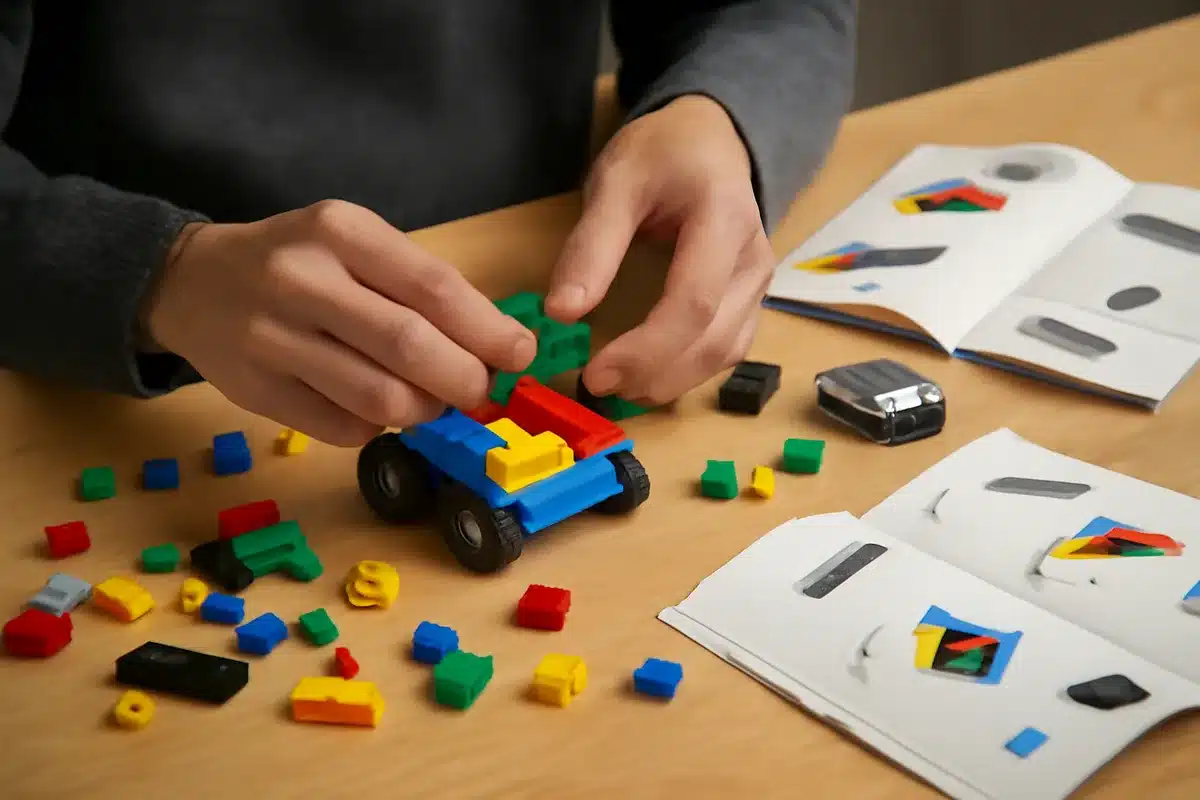
Lego expanded its lineup rapidly: the company released 332 new sets in the first six months — another record. While new launches draw attention, Lego also keeps older, legacy sets in production to serve collectors and long-time fans.
That mix supports a wide range of prices and complexity. For instance, a child-friendly N-1 Starfighter from The Mandalorian retails for about $30, while a nearly 2,000-piece Star Wars set aimed at adult builders carries an approximate $250 price tag.
Christiansen said the company sees strong demand at both ends of that spectrum. “We’ve also seen that we retain consumers really, really well, and we’re selling more to those we have,” he said, pointing to effective retention and cross-selling across categories.
Appealing to many types of builders
Beyond licensed themes, Lego highlighted lifestyle and gateway products such as its botanical models, which are designed to attract hobbyists who might not otherwise consider the brand. Those lines, combined with gaming and sports partnerships, are widening Lego’s audience.
“What is really nice is that we’re growing fast with kids now,” Christiansen said. “We’re also growing with adults. And the fact that we can master both and we can kind of cover the universe of consumers and not just a segment of it. I think that’s also been very crucial.”
By offering varied entry points and keeping a steady flow of new sets, Lego aims to convert interest into long-term engagement, sustaining growth even as global economic headwinds persist.