
Show summary Hide summary
After spring’s “forward” clock change, it’s time to turn the clocks back. In 2026, daylight saving time ends in North America and Europe on different dates — a detail that matters for travel, schedules and any device that doesn’t update automatically.
When the clocks move in 2026 (and next spring)
In the United States and most of Canada, daylight saving time ends on Sunday, Nov. 1, 2026, when clocks are set back one hour at 2 a.m. local daylight time. In much of Europe — including the U.K., which calls the practice British Summer Time — the change occurs earlier: Oct. 25, 2026.
Study finds white dwarfs may appear purple, pink or green
Burger King turns to local franchisees to jump-start its U.S. comeback
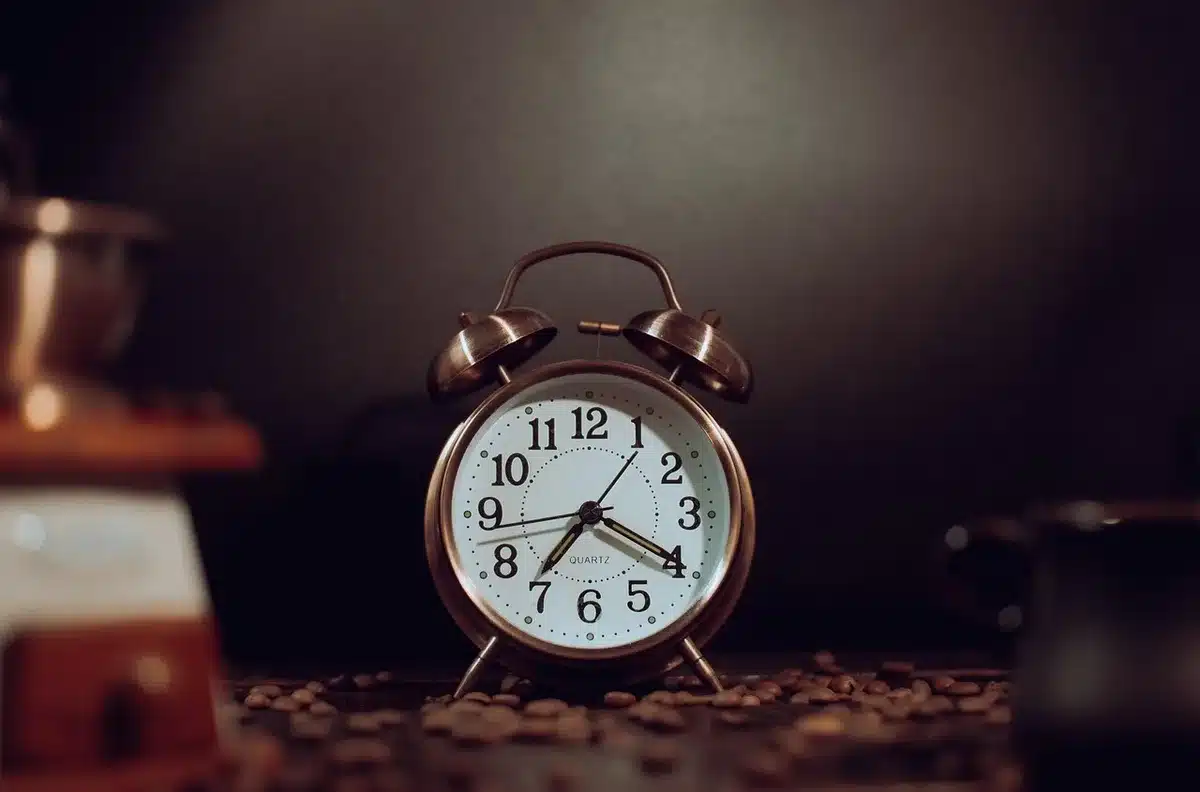
Looking ahead, clocks return to daylight saving time in the spring: in North America on March 14, 2027, and in most of Europe (and the U.K.) on March 28, 2027, when clocks move forward one hour.
How the U.S. schedule works today
Federal law since 2007 sets the U.S. routine: DST begins on the second Sunday in March at 2 a.m., and it ends on the first Sunday in November at 2 a.m. local time. Europe follows a different pattern: clocks change on the last Sunday in March and the last Sunday in October.
Where the practice began
The idea of shifting clocks to make better use of daylight traces back to an 18th-century suggestion by Benjamin Franklin. Governments adopted the measure more than a century later: Germany implemented daylight saving in 1916 to conserve fuel during World War I, and the United States first used the practice in 1918.
President Woodrow Wilson signed the U.S. Standard Time Act in 1918, which established time zones and included daylight saving provisions. The policy has been modified several times since. During World War II, President Franklin Roosevelt instituted year-round “War Time” in 1942. Later confusion among localities prompted Congress to pass the Uniform Time Act in 1966 to standardize observance. An extension contained in the Energy Policy Act led to the current DST period beginning in 2007.
Why countries still use daylight saving time
Advocates argue DST gives people more usable daylight in the evening, which can encourage outdoor activity and reduce some types of traffic accidents. The benefit is most pronounced farther from the equator, where seasonal shifts in daylight are larger.

But the energy-saving argument is mixed. Researchers at Oak Ridge National Laboratory reported modest savings for the extra weeks of DST added in 2007 — roughly a fraction of a percent per affected day — yet other studies have found no net reduction or even slight increases in residential energy use in some places. Factors such as more efficient lighting, and changes in heating or air-conditioning use, complicate the overall picture.
Who observes daylight saving time
Globally, fewer than 40% of countries use DST. In North America, most U.S. states and Canadian provinces follow the same dates, with notable exceptions.
Hawaii and most of Arizona do not observe DST. The Navajo Nation in northeastern Arizona does follow DST, creating a local exception. In Canada, nine of ten provinces observe DST, though parts of British Columbia, northern Ontario, eastern Quebec and large areas of Saskatchewan remain on standard time year-round. Yukon moved to permanent daylight time in 2020, and provincial policy shifts continue: British Columbia plans to switch to permanent daylight time starting in 2026, according to local reporting.
In Europe most countries observe DST; Russia, Iceland and Belarus do not. The practice appears under several names across the continent: CEST in central Europe, EEST in parts of eastern Europe, BST in the United Kingdom, IST in Ireland, and WEST in Portugal and nearby territories.
Southern Hemisphere timing and Australia
Countries south of the equator that use DST set clocks forward between September and November, and back between March and April. Australia does not observe DST nationwide: New South Wales, Victoria, South Australia, Tasmania and the Australian Capital Territory do, while Queensland, the Northern Territory and Western Australia generally do not. In areas that observe it, DST began there on Oct. 4, 2026.
Notable effects and curiosities
- Health studies have found short-term consequences after the spring clock change. A 2014 report in the journal Open Heart linked a rise in heart attacks to the Monday following the “spring forward” shift.
- Research published in 2009 reported that miners lost sleep and experienced a small increase in workplace injuries during the week after the springtime shift.
- Animals and household pets can be affected: routines tied to human schedules — feeding, milking and walking times — shift when clocks change.
- The 2 a.m. changeover used in the U.S. was chosen for practicality: it minimizes disruption to evening activities and early-shift workers and keeps the date from reverting to the previous day.
Additional resources
For historical context and classroom materials, resources include the History Channel’s documentary coverage, Smithsonian Magazine features on past DST experiments, and educational worksheets for younger learners. This article is updated twice yearly; it was last updated on Oct. 16, 2026.