Show summary Hide summary
Fragments of jade‑green Chinese pottery unearthed at Great Zimbabwe are rewriting how archaeologists view the medieval kingdom’s reach. The finds, featured in a new PBS documentary, point to direct or indirect contact between southeastern Africa and East Asia more than a millennium ago.
Rare Chinese ceramics on an African hillside
Archaeologists working at the hillside ruins have recovered glossy, jade‑green sherds that match a Chinese ceramic tradition known as Longquan celadon. The ware’s high‑temperature firing and distinctive sheen indicate production in eastern China beginning around A.D. 950.
Wembanyama’s historic night puts him in elite company after Spurs win
Mid-stage trial shows Eli Lilly combo delivers bigger weight loss, company says

Oxford University archaeologist Shadreck Chirikure, who leads the excavations, said the Chinese pieces appear across the site but in very limited numbers. That scarcity suggests they were not everyday items; archaeologists suspect such ceramics were valued exotic goods, possibly reserved for elites.
Evidence of an extensive Indian Ocean exchange
These celadon fragments join other imported materials already documented at Great Zimbabwe. Excavations have recovered glass from Southeast Asia, India and the Middle East, all carried by maritime routes powered by seasonal monsoon winds.

“From India or Sri Lanka to Great Zimbabwe, it’s at least 8,000 kilometers [5,000 miles],” Chirikure told Live Science, underscoring the long distances involved. Inland trade is visible too: metalwork from regions now in the Democratic Republic of Congo, copper and tin sourced from southern Africa, and chemical analysis of cattle bones indicating exchange across roughly an 87‑mile (140‑km) zone.
Colonial removal and a contested past
Great Zimbabwe has a fraught history of excavation. Late‑19th‑century digs by British colonists stripped the site of ivory, metal and gold artifacts. At the time, colonists argued that Africans could not have built the monumental stone complex and instead attributed it to outsiders such as the Phoenicians.
Many removed objects remain in European collections. A substantial number of Great Zimbabwe artifacts are held at the Pitt Rivers Museum at the University of Oxford, a legacy that continues to shape debates over provenance and interpretation.
Looking ahead: local materials and national symbols
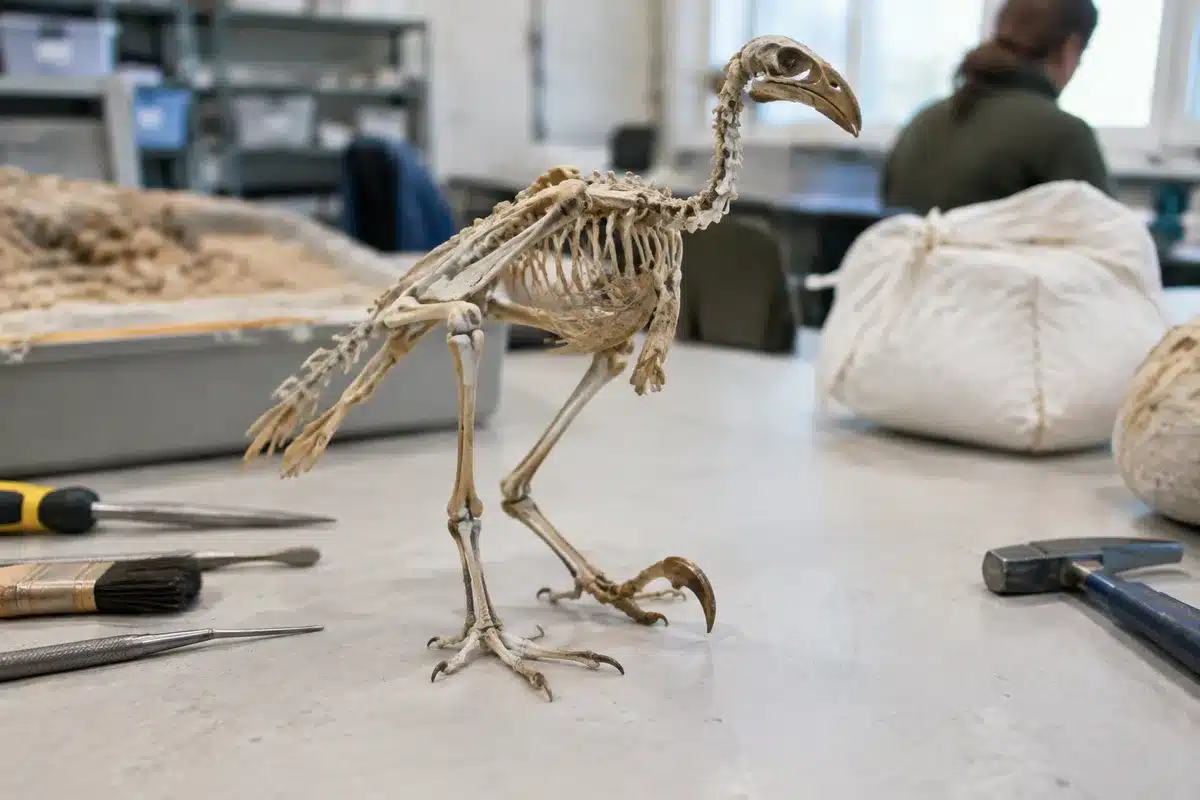
Chirikure says the team now plans to investigate local resources tied to Great Zimbabwe’s cultural identity, beginning with the source of the site’s soapstone. The carved soapstone birds found at the ruins inspired the national Zimbabwe Bird emblem, which appears on the country’s flag.
“It’s time we try to understand a bit more about trade and exchange,” Chirikure says, noting that oceans both separated and connected distant communities. Identifying the geological origins of soapstone and mapping regional resource flows are priorities for future field seasons.
The documentary
The discoveries and the excavation team’s work are featured in the PBS program “Secrets of the Dead: Africa’s Golden City.” The episode premieres Wednesday, Oct. 14, at 10 p.m. U.S. Eastern time.