Show summary Hide summary
When IMAX CEO Rich Gelfond first suggested a possible sale in December, the idea drew attention. Nine months on, the company is enjoying record ticket sales and a soaring share price — yet no major buyer has stepped forward.
A booming business, limited interest so far
IMAX has seen a sharp turnaround since the pandemic, and its market value — roughly $3 billion — makes it an attractive target in theory. Still, talks have so far failed to produce formal offers. CNBC reported the company held preliminary conversations earlier this year but, as of May, had not received official bids. A person familiar with the matter told the network IMAX has not hired new bankers or prepared a formal pitch book.
Ultra-thin women smoking cigarettes are making a comeback as a fashion trend
Windows Memory Diagnostic explained: what the test does and how to read results
Industry dealmaking is busy right now. Media consolidation and large strategic purchases — including a contested Paramount Skydance–Warner Bros. Discovery tie-up, Fox’s agreement to buy Roku for $22 billion, and Comcast’s planned NBCUniversal spinoff — are reshaping who has the appetite and capital to pursue new acquisitions.
Box office strength and pricing power
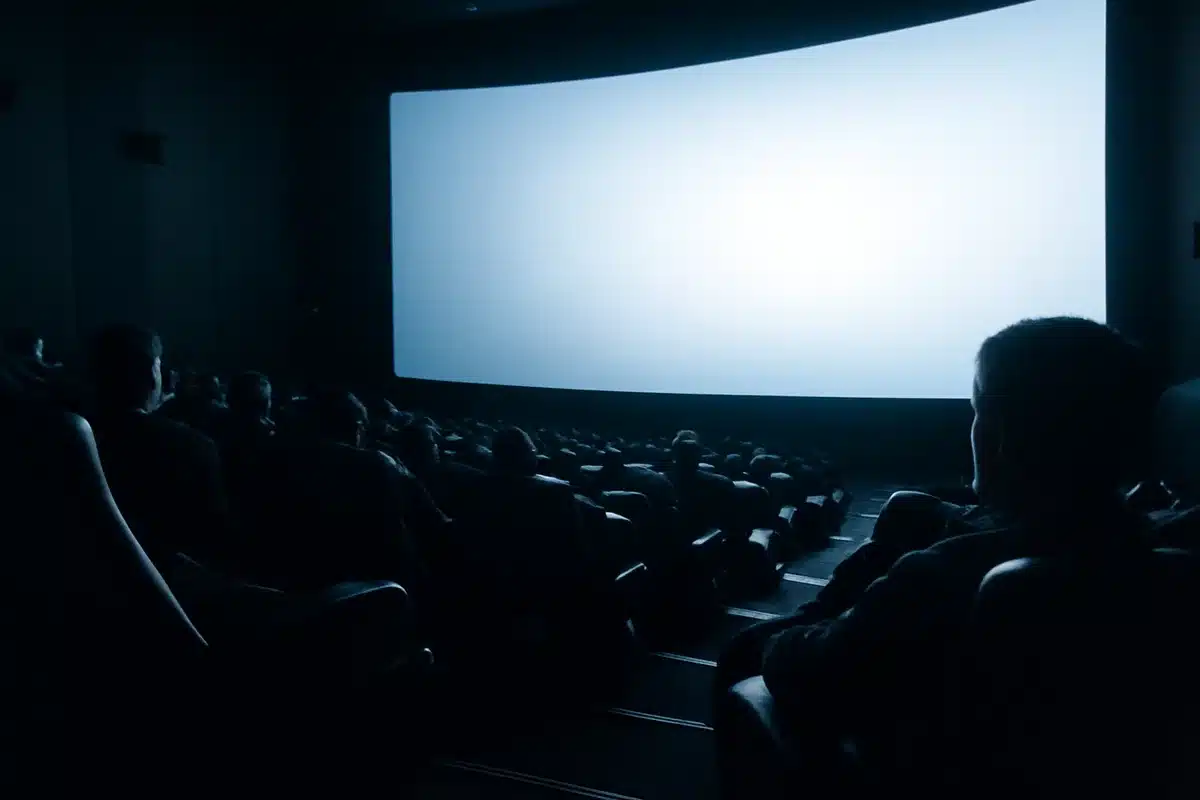
IMAX’s recent momentum has been driven by blockbuster performance and premium ticketing. Christopher Nolan’s “The Odyssey” became the first film in IMAX’s history to sell more than $400 million in IMAX tickets globally. That sum accounts for nearly 30% of the film’s worldwide receipts, despite IMAX screens making up less than 1% of all movie screens.

Looking ahead, Warner Bros. and Denis Villeneuve’s “Dune: Part Three” has already pushed specialized screenings into January, with strong pre-sales. Wall Street analysts expect IMAX to set a new global box office record in 2026 after the company posted a record $1.28 billion the previous year. IMAX’s 2025 ticket sales were more than 40% higher than 2024 and about 13% above its 2019 peak.
Part of the success comes from price elasticity. According to EntTelligence, the average adult IMAX ticket in the U.S. cost $20.57 so far in 2026 — roughly 60% higher than the average standard ticket of $12.75 and about 18% above other premium large-format offerings that average $17.46.
IMAX is also expanding its content pipeline and global footprint. The company expects its slate of films “filmed for IMAX” to grow materially through 2028, and it is partnering with exhibitors in China, Japan and South Korea to screen local-language titles. IMAX told CNBC last year that it plans to install roughly 160 to 175 systems in 2026 and already has contracts to build hundreds more.
Who would be a logical buyer?
Any potential acquirer would need to preserve IMAX’s studio relationships and theater partnerships, analysts say. IMAX has long positioned itself as studio-agnostic, charging studios equally and negotiating premium release windows with exhibitors.
That neutrality creates a conflict for major studios. Eric Wold of Texas Capital Securities warned that if a studio bought IMAX, rivals might feel disadvantaged for prime release slots during holidays and summer, potentially souring industry relations.
Historically, studios have been cautious about owning theater chains even after the Department of Justice’s restrictions from the 1948 Paramount Consent Decrees formally ended in 2022. To date, few have moved aggressively into exhibition; Sony’s purchase of Alamo Drafthouse locations in 2024 is a rare example.
Analysts have pointed to several alternative suitors: tech and streaming giants such as Netflix, Apple and Amazon, as well as entertainment companies like Sony. Netflix has recently shown a greater appetite for deals after its failed agreement to buy Warner Bros. Discovery’s studio and streaming assets. Unlike traditional studios, a streamer’s theatrical conflict would be smaller, since theatrical distribution is not central to its model.
Apple, Amazon and Sony each combine technology and content businesses that could align with IMAX’s tech-heavy operations. Private equity bidders also remain a possibility; buyout firms would sidestep studio-conflict concerns and might aim to benefit from IMAX’s current growth trajectory.
‘Perfectly fine as a standalone company’
IMAX shares climbed to an all-time high of $54.79 this week, up nearly 80% over the past year. That rally has made a takeover more expensive and, some analysts say, less likely in the near term. Alicia Reese of Wedbush pointed out the company is “a lot more expensive than it has been for a long time.”
When Gelfond first floated the possibility of a sale, the stock traded near $36 and IMAX had a market cap around $1.95 billion. The market value has since risen by roughly $1 billion.
Several firms maintain bullish targets — some as high as $65 a share — and B. Riley’s Drew Crum recently raised his target to $61 from $52, forecasting record 2026 financials driven by share gains, margin expansion and strong cash flow.
Still, broader questions about theatrical recovery remain. North American box office revenue has not yet returned to 2019 levels, and exhibition is typically a slower-growth, dividend-oriented sector, Wedbush’s Reese noted. Because IMAX is not actively pursuing a sale but only entertaining interest, its management can afford to be selective.
“I think the main point is that IMAX is perfectly fine as a standalone company,” Reese said. “They’re not going to go for just any bid — they want a premium to current trading levels.”